
How to prepare the grid for electric medium- and heavy-duty trucks: Lessons from Los Angeles

Los Angeles (LA) is a hub of freight activity — more than $512 billion in cargo moves through its ports and main airport (LAX) every year. From heavy-duty (HD) trucks beginning long-haul trips to box trucks delivering goods across the city, a wide variety of vehicles contribute to local freight movement. And all of that freight movement contributes to LA having the worst ozone pollution in the nation. Electrifying trucks will help the city reduce overall ozone levels as well as some of the particulate matter (PM) along the interstate 405 and 110 corridors. The air pollution along these highways contributes to the disproportionate amounts of asthma and heart disease in many of the nearby low-to-moderate income neighbourhoods.

One barrier to medium- and heavy-duty (MDHD) truck electrification is LA’s charging infrastructure: the city’s growing number of electric MDHD trucks will need many more chargers. By 2030, these trucks will need as much as 22 megawatts (MW) in some local areas. New analysis from RMI and the Mission Possible Partnership shows stakeholders how to meet that demand.

Fleets, utilities, local government, and charging as a service (CaaS) providers all know that preparing the grid for increased power demand will require grid upgrades and the installation of new chargers, which will take years to deploy.

As fleets wait for these updates, they can take advantage of a complementary solution: managed charging, a proactive, controlled charging strategy that benefits the customer and electric grid. By revisiting their charging practices, trucking fleets can reduce pressure on today and tomorrow’s grid, meet their current and future charging needs, and save money.

Implementing these solutions — upgrading the grid, installing new chargers, and improving current charging operations — will require intense collaboration between stakeholders and robust data and analysis.

Specifically, they’ll need to know where and when MDHD trucks currently operate, where future power demand will be, and how this demand will impact the grid. With this information they can make decisions that will meet the power needs of electric trucks as quickly and cost-effectively as possible.

A new analysis from RMI and the Mission Possible Partnership (MPP) provides these critical insights. Using Geotab Altitude truck travel data in LA, the analysis can help stakeholders identify areas where new chargers and CaaS solutions will have the greatest impact. It also shows how fleets can use managed charging, a demand flexibility strategy that minimizes charging load during peak demand times, to reduce pressure on the grid while also saving money.

Below, we outline our findings and their implications for truck electrification stakeholders.

Where and when will electric truck power demand be greatest?

Areas with the largest power demand include LA’s ports and its downtown, as well as the city of San Fernando. While many vehicle types are active in these areas, there is a notable concentration of HD truck activity at the Ports of LA and Long Beach, with medium-duty (MD) trucks having more activity downtown.

Both MD and HD trucks have similar usage patterns. Both vehicle types tend to return to their depots around 4 p.m., contributing to the highest unmanaged load peaks at that time. However, their schedules diverge later in the day. HD trucks are more likely to return to their depots late at night and into the early morning, while MD trucks have shorter operational windows for their duty cycles. Additionally, HD trucks consume more power overall and tend to drive more miles per day (roughly 115 miles for urban HD trucks compared to 75 miles for urban MD trucks).

Where should stakeholders prioritize charging deployment?

Areas with high projected power demand are the same as those where truck logistics facilities exist today, making these locations valuable not only for grid operators anticipating new electric loads but also for stakeholders identifying sites for CaaS facilities. These sites provide fast or multi-hour charging options for fleets that need a quick boost or a reliable daily charging solution.

While CaaS may cost a fleet more than owning and operating its own charging infrastructure, it offers valuable benefits for fleets that are unable to charge at their home base. This includes fleets with short facility leases that may not want to invest in charging equipment that is hard to move to a new site, as well as fleets that may not have enough depot space to install new chargers. Strategically placing CaaS facilities in areas with both grid capacity and high trucking demand maximizes the value of those facilities and ensures electric trucks remain feasible. Our analysis shown in the map of LA above can help utilities, local governments, and CaaS providers work together to create effective, well-located charging hubs. Identifying demand is a crucial step but so is working with local communities to ensure that a CaaS site is a good neighbour.

Maximizing today’s grid: Why fleets should transition to managed charging

Managed charging is a powerful way for fleets to power their electric trucks. By changing where, when, and how they charge, they can improve operations, save money, and reduce pressure on the grid. And since managed charging better leverages existing infrastructure, they won’t have to worry about how to power their vehicles as they wait for infrastructure upgrades, which may take years to implement.

The first step in transitioning to managed charging is to understand how often trucks are used. Our research found that the median truck has 15 hours of downtime per day and that, even on busy days, trucks are not used 24 hours.

The next step involves adjusting at what time trucks should be parked at their depots. Charging at off-peak hours, like overnight, is more cost-effective than charging during peak hours. And when trucks charge overnight, they can charge slowly, which is more energy efficient and requires less expensive hardware.

In LA, afternoons are also off-peak periods, when lower demand and high solar production often create excess available energy.

What’s the potential load reduction?

Getting more usage out of surplus grid capacity can spread the high fixed costs of infrastructure upgrades over more hours, which ultimately can lower the cost of electricity for all users. For instance, if a location normally has a 19 MW load, slow charging all vehicles would reduce that load to 14 MW. Similarly, overnight charging would yield a 22 MW load, but this load would only occur after 9 p.m., when the grid generally has capacity and when power is cheaper. These numbers are specific to the analyzed area with the highest unmanaged power demand in this study, but the larger trends will be comparable in other areas as well.

The real world will undoubtedly deviate from our model. For example, results from the North American Council on Freight Efficiency (NACFE) and RMI’s Run on Less Electric DEPOT show, some fleets will maximize use of electric trucks since their operational costs are lower, potentially charging during peak hours. These charging strategies presented above are the ends of a spectrum, with likely future load curves somewhere in the middle. However, by understanding what is possible in terms of mitigating peak demand and anticipating the magnitude of these loads, ps utilities can plan for grid upgrades, help charging providers identify where charging infrastructure can make the most impact, and work toward the least-cost solution.

What’s next

Understanding where vehicles operate, where charging infrastructure is needed, and how to optimize electricity usage during off-peak times is a crucial step for any community, government, or utility planning a smooth transition to electric trucks. Utilities that can confidently predict the size and location of future demand can enable faster fleet electrification while keeping costs down for all customers. Local governments can play a key role by offering land or incentives to support CaaS facilities, ensuring that small fleets and those without depot charging capabilities are not left behind in the transition to cleaner freight systems.

Electrifying freight vehicles in LA offers significant benefits but the resulting power demands must be carefully anticipated and managed to support the grid while keeping costs in check. While fleets have various charging options — including the ability to charge away from depots — these choices will directly shape the impact of EV trucking on the grid.

This analysis helps pinpoint where utilities, local governments, and charging developers should focus their efforts. By aligning utility planners, fleets, policymakers, and developers, LA can create resilient infrastructure that reduces emissions, improves air quality, and accelerates the shift to a cleaner freight system in one of the country’s busiest logistics hubs.


Methodology

The above map uses Geotab telematics data to forecast EV power loads for 2030 across the city of Los Angeles. Geotab analyses trip data for commercial fleets, computing aggregate statistics for vehicle driving behaviour and domiciling characteristics. Information such as daily vehicle miles travelled (VMT) and domicile times are used to build hourly load curves for medium- and heavy-duty trucks, with peak loads calculated for individual local areas. Vehicle populations are determined from VMT registration data and assumed to be distributed across the city at the same density as domiciling stop frequency. It is also assumed that fleets electrify at rates comparable to ACF compliance milestones, comparable to other research projecting that 13% of heavy-duty fleet vehicles will be electrified by 2030.

About Clean Industrial Hubs

The insights discussed above come from Mission Possible Partnership and RMI’s Clean Industrial Hub in Los Angeles, California, that accelerates industrial and heavy transportation decarbonization in the region. Clean industrial hubs bring together policymakers, financial institutions, project developers, and community-based organizations to enable ground-breaking decarbonization projects in the hardest-to-abate sectors. In Los Angeles, RMI and MPP’s analyses, convenings, and tools support stakeholders working to advance zero-emissions trucking, low-carbon cement plants, sustainable aviation fuel, and decarbonized ports, by increasing the size, scale, and speed of critical climate investments that benefit the environment, the economy, and communities. This work is done in partnership with the Bezos Earth Fund.

Easing the permitting process for Clean Industrial Projects in California

In 2024, California ranked as the fifth largest economy in the world for the seventh year in a row. It generates 14% of the U.S. gross domestic product and is the top state in the country in manufacturing output, businesses, and employment. However, despite this stellar record for industry, the industrial permitting process in California remains long and complicated, particularly for emerging clean industrial projects such as hydrogen production facilities, carbon dioxide removal projects, and other innovative industrial decarbonisation technologies. Given that industry is the second largest emitter in the state, at 23% of total emissions, these projects are crucial for meeting California’s climate goals. Industry also currently employs 1.2 million Californians, and deploying new industrial projects in the state will be crucial to keeping – and increasing – those jobs as older technologies retire.  However, they face significant permitting challenges that can delay or even prevent their deployment. While state agencies, legislators, and local permitting bodies have been working for decades to improve the process and support deployment, many industrial projects still struggle to get permitted in a timely manner.

Solutions for these delays and cancellations exist on both sides of the permitting process: policymakers can streamline procedures without compromising environmental review or community justice elements, and permit-seekers can follow best practices to avoid common delays. Based on interviews with more than two dozen industrial permitting stakeholders and two stakeholder convenings, this memo outlines key challenges and solutions to begin improving the California permitting process for clean industrial projects ranging from clean fuel refining, to cement plants, to steel production, and more.

(Note: This work is focused on ways to improve the permitting process for industrial infrastructure across many non-power sector industries. Power generation and transmission infrastructure were not included, given their unique permitting needs and challenges).


Overview of California’s permitting process

Before starting construction, clean industrial projects must navigate permits across three levels of government — local, state, and federal — each level being responsible for different aspects of project approval. While local authorities typically have the first and final say on project approval, permits at any level can influence where, how, and whether a project gets built.

The complexity of the process for any given project varies significantly based on type, size, and location but projects may require many of the permits below:

  • Local permits cover building, fire safety, zoning, and other site-specific requirements, and can also include local preferences from communities like required green space, amenities, and specific aesthetic design requirements.
  • State permits include environmental reviews, such as the California Environmental Quality Act (CEQA), Clean Air Act Title V Permitting, the Industrial General Permit, and Hazardous Waste Permits.
  • Federal permits may include National Environmental Policy Act (NEPA) review and Army Corps of Engineers 404 permit approval for projects affecting waterways.

A fundamental feature of California’s permitting process is that much of it is decentralised. Local permits are developed and approved by the hundreds of city and county-level authority-having jurisdictions (AHJs), while various state-level permits can be administered by one of the thirty-five local Air Districts, one of the nine local Water Boards, or one of the 81 Certified Unified Program Agencies (CUPA). This adds challenges to improving the permitting process. For example: staff capacity for permitting is a commonly cited challenge, but given that the locus of permitting is decentralised, simply ‘adding capacity’ to the relevant agencies would require hundreds of staffers across the state, often paid for with city and county budgets, rather than adding a handful of staff at a centralised state-level agency.

Each of these permits fundamentally exists to prevent adverse outcomes for local communities, the environment, or the state, and some project managers have reported that permits can also benefit the projects themselves by ensuring that engineering and construction plans are sound and the host community is supportive. However, the existence of so many permits can also present immense challenges for projects, including determining the correct sequencing of applications, providing redundant information across permits, and navigating comment and feedback timelines from permit approvers.

These benefits and challenges represent the difference between productive friction and non-productive friction in permitting. An effective state permitting process keeps the productive friction, which requires projects to prove that they will be good neighbours to their host communities, and reduces non-productive friction, which can unnecessarily delay projects, even to the point of failure, at which point the benefits the project could have brought to the community (climate, economic, labour, and otherwise) are forfeited.


What’s at stake

California has a long history of leading the nation in climate action, as well as fostering innovative technologies and industries. Even so,  the coming decade will be crucial to meeting climate goals and avoiding the worst outcomes of climate change, while also creating new economic growth. As innovative clean industrial technologies are developed and nurtured by the influx of financial support from federal programs like the Inflation Reduction Act and the CHIPS and Science Act, start-ups and incumbent companies alike are looking for friendly geographies to site their new projects.

California must make it a priority to welcome and support such technologies. Good work is already being done — the Governor’s Infrastructure Strike Team is tasked with streamlining funding and approval for projects in the state, the legislature has passed bills like AB 1236, AB 970, and SB 1418 which target specific industries like charging and hydrogen fuelling stations to encourage infrastructure deployment, and the California Governor’s Office of Business and Economic Development (GO-Biz) has published resources and guidebooks for specific permitting pathways. But many companies continue to report serious challenges in permitting, which at the very least result in delays, and at most lead them to cancel projects or to leave the state and deploy their projects elsewhere. This issue is especially challenging for insurgent technologies and start-ups, which likely do not have the resources to hold onto a parcel of land for years on end while they wait for permit approvals — meanwhile incumbent, and often dirtier, technologies do.

In order to maintain its status as a leading location for visionary and climate-friendly companies, California must do more to improve the permitting process and support new infrastructure deployment.


Recommendations

Even though the process of permitting is in the hands of local and state-level authorities, actually getting a project permitted is a joint effort between the company seeking the permit, the local community, and the relevant permitting jurisdictions. To that end, the recommendations below target both sides of the equation: there are steps that can be taken by both companies and policymakers to reduce non-productive friction and decrease delays — without sacrificing the safety, environmental justice, or community review of the project.

For Permit-Seekers

1 – Be strategic with site selection

When choosing a site for a project — if possible — prioritise locations that are already zoned for industrial use, have existing similar projects, or have undergone comprehensive environmental assessments. This increases the likelihood that the local permitting jurisdictions are familiar with the process of assessing and approving new clean industrial technologies. It also can avoid confusion as to how a new technology should be classified for permitting, which can delay and prevent projects.

2 – Be proactive with local community engagement

The communities near a new industrial site should be treated as hosts, not obstacles. It is imperative that companies clearly communicate project risks and benefits in multiple formats (e.g., meetings, websites, office hours) above and beyond what is required by permits, and consider what local values and concerns might be. Additionally, project managers should establish early and open communication with local planning offices, including in-person meetings if feasible.

3 – Utilise third-party validation for an additional layer of assurance

Permitting unique or novel projects can put extra pressure on permitting offices to ensure that the project will be safe for local communities, especially if it is unfamiliar technology. Engage a reputable local third-party engineering firm to validate project plans and safety to add an additional layer of assurance to permitters signing off on projects.

4 – Consider hiring expert consultants to help navigate the permitting system

Even with the best-laid plans, the permitting process can quickly become more complex than expected, especially for new technologies that may be unfamiliar to local permitters. Hiring consultants with deep experience with relevant regulatory agencies ensures that they can help navigate particularly tricky permitting processes. An added benefit if a consultant has experience with the other side of the permitting process is that they will be able to “translate” both the information needs of the local permitting offices and the complexities of the proposed project to limit misunderstandings between permitter and permittee.

5 – Leverage state resources

GO-Biz offers numerous resources to companies looking to build in California. Utilise free resources provided by GO-Biz, including permitting guidebooks for specific industries, expert personnel, and permit mediation in the event a permit stalls out at the local or state level.

For state policymakers, agencies, and authority having jurisdictions

1 – GO-Biz can clarify and standardise the permitting processes when possible

While GO-Biz does not have direct jurisdiction over local permitting processes, localities often look to them for guidance on navigating challenging permitting issues. GO-Biz could develop and publish more industry-specific permitting guidebooks (like the EV charging guidebook) for targeted emerging technologies like hydrogen production sites and carbon dioxide removal. This gives clarity to companies navigating the process and can also aid local jurisdictions in developing permitting pathways for first-of-a-kind technologies, leading to more standardised processes across the state.

2 – Legislature can learn from the successes and challenges of existing permitting laws

The state legislature could use the lessons from existing permit-smoothing bills like AB 1236 and AB 970 to improve future attempts at improving the process. Those laws have been successful in that they prove that targeted permit streamlining legislation does indeed reduce permit wait time, and the Zero Emission Vehicle Division of GO-Biz has been working tirelessly to bring localities into compliance with such laws. has been working tirelessly to bring localities into compliance with such laws.

There are lessons to be learned in future legislation. For example, current laws that aim to expedite vehicle charging station permits only speed the permits that are directly related to the charging infrastructure. However, projects are still getting delayed by the other permits they need for the project, including those for features like on-site bathrooms, retail amenities, or retaining walls. Furthermore, localities are not always aware of the state-wide legislation that impacts them and often need support to come into compliance. Legislation that impacts local permitters must come at the very least with clear instructions to localities on what is needed from them, and ideally also with state-level financial and personnel resources to help localities to comply.

3 – Investigate how to effectively centralise some permitting, especially for first of a kind technology

Many stakeholders in the industrial permitting world have raised the idea of offering localities a pathway to outsource permitting to state-level agencies or private contractors when their queue is too long, or they feel unequipped to safely permit an unfamiliar technology. While this might be an effective solution to some of the most pressing permitting issues, including local staff bandwidth and lack of background in cutting-edge technology, it must ensure that centralising the permitting process for some cases does not reduce community oversight of projects and maintains the appropriate level of scrutiny on projects. The Governor’s Office or Legislature could request a study be done to determine if, when, and how permitting could be outsourced in certain situations. The results of this study can then guide future rulemakings and legislation to speed the permitting process for all industries safely and fairly.

4 – Legislature could take action to improve CEQA by maintaining productive friction and reducing non-productive friction

CEQA — which is similar to but more ambitious than NEPA — has been an effective tool for ensuring that proposed projects consider and mitigate negative impacts on the communities and the environment of California for more than half a century — in other words, it provides a significant amount of productive friction. But it also stands as one of the largest sources of non-productive friction in the permitting process as well, often taking well over a year to be approved, and sometimes going into three or more years. As a result, there have been calls from many corners of the industrial landscape to improve, overhaul, or even to eliminate CEQA.

While eliminating CEQA could have serious repercussions, if California is serious about attracting the next generation of industrial technology, the CEQA process should be improved, likely by legislative action. Some ways to maintain productive friction and reduce non-productive friction include assessing the CEQA permitting process for redundancies with other major permits, like Title V Air Quality Permits and the California Industrial General Permit and either eliminating the duplicative pieces in CEQA or allowing CEQA approval to expedite the approval of additional and at times redundant permits. It could also include limitations on legal challenges or allowing the permitting process to continue during legal challenges that are not environmentally related. Additionally, it could mean expanding the list of categorical exemptions to match that of NEPA, which has a more extensive list of exemptions, and would allow for faster approval of well-understood and low-risk project types.

It is important to note that CEQA has been a foundational tool for improving or blocking projects that would be harmful to communities, local environments, and the climate. Any changes to its process must be carefully written to ensure that these crucial stopgaps are maintained to prevent bad actors from capitalising on an overly permissive permitting environment. While the goal may be to ease the overall permitting process to enable development of the clean technologies of tomorrow, we must ensure that rigorous environmental standards are maintained, and community safety remains at the forefront of regulation.


Conclusion

The permitting process in California is complex and work-intensive on both the side of the permit-seeker and the permitting agencies and local governments. As a result, improving the permitting process for clean industrial projects will require coordinated effort from both policymakers and project developers. Policymakers must create clearer, more standardised processes while maintaining environmental and safety standards. Project developers must approach permitting strategically and engage proactively with communities and officials. Success in streamlining these processes is crucial for California to maintain its leadership in clean technology deployment, employment, and in meeting its climate goals.


Four ways to jump-start clean hydrogen finance in 2025

The gaps

An information gap is slowing the nascent market for high impact industrial decarbonisation projects. To begin bridging this gap, RMI’s Industrial Transition Finance team initially focused on the emerging clean hydrogen market, recently completing its “hydrogen project finance roadshow” as part of the RMI and Mission Possible Partnership’s (MPP) Clean Industrial Hubs program. This initiative shared consolidated insights from a dozen leading financial institutions (FIs) with a dozen US hydrogen developers to foster knowledge exchange and pave the way for efficient market growth.

RMI and MPP’s Hubs program brings together financial institutions, policymakers, project developers, and community-based organisations to enable ground-breaking decarbonisation projects in the hardest-to-abate sectors. This work is done in partnership with the Bezos Earth Fund.

This article summarises hydrogen developers’ questions and responses to the investor community during a series of roundtables. The roadshow highlighted five major gaps between developers and FIs – and four potential market developments that, together, could close them:

Gap 1: Performance data

Using the ammonia sector as an examples, there are just two “clean” plants operating globally today with another 10 at Final Investment Decision. The energy transition needs 60 such new projects online by 2030 — a fivefold scaling in five years. Given this need, sponsors are often skipping pilot-stage projects and going straight to commercial-scale (albeit, taking a phased approach, with capacity ramping up over time). As one investment banker said, “We’re going straight from kilowatts to gigawatts without the megawatt-scale stuff in between.” The speed of this scale-up means neither debt nor equity investors have enough data on technology performance, plant production, feedstock usage, etc. to appease their cautious credit committees.

On the other hand, a private equity-backed developer flagged that banks’ perceived technology risk feels overblown because 1) certain electrolyser designs from original equipment manufacturers (OEMs) are not as risky as perceived, and 2) alkaline and proton exchange membrane electrolyser’s solid operating performance should scale smoothly to the gigawatt-scale because the modular cells increase in number rather than size. As one example of how to begin bridging the data gap, the hydrogen market could emulate the Enhanced Rock Weathering (ERW) market, where Cascade Climate is introducing the ERW Data Quarry, the first-ever ERW data-sharing system with 10 leading ERW companies already committed.

Gap 2: Offtake expectations

Banks’ traditional project finance frameworks generally seem too rigid to fund first-of-a-kind hydrogen facilities. Bankers are trying to find easy analogues for green molecules transactions but neither renewables nor LNG deal structures are perfectly replicable templates. While hydrogen and hydrogen-derivatives like ammonia mirror early renewables deals in their need for government loan guarantees and state procurement, the current grey ammonia industry, for example, operates on 1–2-year offtakes rather than 10–20-year offtakes.

Hydrogen buyers and financiers will need to “meet in the middle” in tactical and structural ways. Tactical solutions could include adding interest rate step-ups if the project isn’t able to recontract offtake, and/or letting “mini-perm” loans amortise beyond the length of original offtake contract. Solutions could also be structural, like aligning investors and sponsors around the value of projects’ climate attributes (e.g., how much more should investors value a project because it has locked up finite local biogenic CO2 supply that competitors will struggle to emulate?).

Similarly, investors in offtakers (e.g., sustainability-focused corporate share- and bondholders) could incentivise corporate policy reform that encourages procurement teams to pay the necessary greenium for clean commodity contracts instead of sticking to status quo procurement practices, which mostly incentivise minimising operating expenditures. In other words, if the most influential investors in a listed European petrochemicals giant properly incentivise the management team to procure green ammonia (like food makers pay a premium for fair-trade cocoa), this could unlock the offtake contracts needed to make green ammonia bankable. This would be a fundamental shift in mindset, with offtakers shifting their perspective on the role of their procurement departments — from cost centre to a powerful medium for investments in the clean energy transition.

Gap 3: Return expectations

This first wave of clean hydrogen and hydrogen-derivative projects will get built because we must kick-start industrial decarbonisation — not necessarily because they’ll generate handsome financial returns. Climate infrastructure is challenging precisely because it combines large up-front capital requirements with the relatively low returns of infrastructure and complexity of emerging technology.

Governments (both through subsidies and penalties) and philanthropy have a role to play in de-risking and improving projects economics. This support can bring the costs of hydrogen debt, equity, and tax equity closer to the financing costs of comparable renewables and LNG deals. And even with that external support, pureplay project developers expecting to exit with the multiples offered to software start-ups, for example, may be disappointed — as might creditors looking for core infra-like risk/return. The bulk of financial returns may come from/after refinancing these projects in 3–5 years as the industries mature, rather than from during initial investment period. Until then, creative risk-sharing through blended capital stacks and novel deal syndication will be needed just to meet investors’ minimum return thresholds.

Gap 4: Risk management solutions

There’s a standard way to measure and price traditional infrastructure project risks—the sponsor can pay for a full-wrap EPC, performance guarantees, and/or insurance. Emerging climate infrastructure is trickier. In green hydrogen for example, investors and sponsors are unsure whether to solve intermittent clean electricity supply by overbuilding storage infrastructure or overpaying for firm power; they’re unsure whether exporting lowers their regulatory risk (by diversifying it) or increases their financing cost (because their project is now much more complex). The consensus on efficient risk management for new clean industrial projects will likely form only as the first deals close in 2025. In the meantime, to speed up learning, more transparency is needed on the deal structure, offtake agreement provisions, and other risk management solutions that get deals over the finish line.

Gap 5: First mover investors

Developers are not only wondering who the first mover offtakers are, they are also asking which banks, asset managers, and institutional investors are first mover financiers. In public, financial institutions have committed billions to the energy transition; in practice, developers are encountering more fast follower behaviour from investors, with limited access to the types of flexible terms needed from first movers to scale up nascent markets.

Part of the issue resides in the legacy investment selection frameworks that guide most mainstream investor decision-making with limited evidence that the value being created by high impact climate solutions is being properly accounted for. In parallel, the risk exposure of legacy assets being used as benchmarks for investment performance also needs to be properly accounted for. There is a lack of transparency on which investors have greater risk capacity/appetite, and therefore should be the focus of fund-raising efforts for high impact industrial decarbonisation projects.

At this stage of the market, there is often a fundamental disconnect on term structures, which immediately halts fundraising progress. For example, developers cite frustrations as they pitch to private equity funds who want risk-return profiles similar to a wind farm or toll road; venture capitalists meanwhile often want proprietary technology to be licensed so revenues can scale exponentially. Lastly, sponsors understand they may need to dilute equity — painful as it may be — to bring midstream companies, utilities, etc. into the consortium. However, that partner identification process is time-consuming. It is a job ripe for innovative deal-making from investment bankers, but those bankers are also highly incentivised to be fast followers instead of first movers, often focusing their attention on easier to implement solutions like drop-in fuels, which at this stage of the market, are much easier to structure and scale.


Bridging the gaps

As one developer pointed out, today’s hydrogen projects pose the classic chicken-and-egg problem: sponsors need capital to de-risk projects, and investors need de-risked projects to provide capital. We therefore need creative solutions that align investments with climate impact and bring different sources of capital together. Here are four developments to help the market scale.

Development 1: Creative deal syndicates

Creative deal syndicates can help spread risk across multiple investors to reduce risk for each individual investor. For example, they can bridge the gap between developers’ and FIs’ performance data quality: Financial investors without high-quality data could get comfortable with a deal where large strategic investors and/or OEMs provide performance guarantees or experience with similar kinds of projects. Take, for example, the Egypt Green Hydrogen Project at Fertiglobe’s Ain Sokhna ammonia plant in Egypt, which recently won the €397 million 10-year H2Global contract. The project plans to spread risk between multiple parties with complementary expertise spanning a complex value chain; the table below indicates how different types of organisations could bring their unique de-risking abilities to an emerging climate infrastructure project:

The project is expected to raise debt from five North Atlantic development financial institutions by mid-2025. US developers may similarly need to bring in “first-mover” institutional investors and strategic corporate investors (such as utilities or offtakers) into their equity consortia — a process investment banks can accelerate. Creative deal syndication helps the market by 1) spreading risk more evenly across different investors/sectors/geographies, 2) ensuring finance reaches high-impact projects (rather than only low-hanging fruit), and 3) maturing these nascent commodity markets so they begin to resemble established liquid, transparent, global commodity markets.

Diverse syndicates require balancing competing objectives of multiple parties; bankers generally like consortia partners with “molecules” expertise and large balance sheets. In parallel, to attract more “first mover” investors, more work needs to be done to articulate and gain consensus among offtakers and investors on the value created by products and services in the industrial decarbonisation economy.

Development 2: Innovative capital stacks

As more types of investors enter the market, sponsors can access more types of capital and this increased flexibility should further support risk sharing. This, for example, could bridge developers’ and FIs’ return expectations: banks may get comfortable providing senior debt if they know there’s first-loss financing from impact investors and/or a tranche of flexible junior debt. Non-dilutive capital remains the holy grail for sponsors: several US developers have already secured federal and state grants and can also look to regional economic development agencies to provide tax abatements. RMI publishes free databases to source both public and private capital.

First-of-a-kind capital stacks may explore government funding, philanthropic grantsconvertible notesimpact investors willing to forego financial returns for emissions impacts, royalty-based financingmezzanine capitalsale leasebacksequipment/inventory financing, trade financing, and more. At least one investment banker in the roadshow was exploring municipal bonds. Oaktree’s Montana Renewables deal in 2021, for example, combined several innovative features. For certain projects, sponsors may also plan to refinance some of their bank debt by accessing the “term loan B” market post-construction; power/energy sponsors have often used these leveraged loans to increase debt-to-equity once assets are operational and use new, extra debt for a dividend recap. New industrial projects will carry new risks; the more parts of the financial sector that can absorb them, the healthier it will be.

Development 3: Driving change with institutional investors

Institutional investors have directly financed clean hydrogen projects. For example, Canadian pension and insurance funds helped put $650 million into the ACES Delta project in Utah. Yet, with some exceptions, institutional investors and their asset managers — especially in the United States — can do much more to shape industrial decarbonisation.

In 2025 and beyond, institutional investors should increase their exposure to green molecules, starting by aligning their sustainable investment frameworks to incorporate industrial decarbonisation pathways and properly value key technologies and business models essential to sector transitions. Lenders to shippingsteelaluminium, and aviation already have robust sectoral decarbonisation pathways to benchmark companies’ pathways against. Individually or through climate investor networks and campaigns, investors can also engage directly with industrial corporates to request robust net-zero targets and procurement reforms that lead to long-term offtake of green molecules. In this way, they can directly bridge developers’ and FIs’ offtake expectations.

As the largest part of the financial sector, institutional investors can then demand more green industrials-themed investment vehicles, which would incentivise asset managers to seek out more credible projects, accelerating industrial decarbonisation into the mainstream, and lowering cost of capital for high impact projects. This could help facilitate the creation of tailored investment funds that have a greater tolerance to technology risk due to the decreased regulatory risk and increased exposure to new sources of value derived from the energy transition. Alternatively, institutional investors reshaping their views on risk mitigation could have the same impact: investment in clean industrial projects and technologies can represent a hedge against volatility in legacy fossil fuel investments. Targeted investments in sustainable industries, such as clean hydrogen projects, can create more resilient portfolios that adapt to changing regulatory pressures and public sentiment.

Development 4: Involving insurance early

Traditionally, investment banks’ advisory teams are the external financial experts involved in shaping development-stage projects. But their time is extremely limited and their focus is nearer-term revenue opportunities, like “renewable natural gas,” biodiesel, and other drop-in fuels. Insurers can step in to play that advisory role for emerging climate infrastructure like hydrogen. By helping sponsors during pre-FEED or FEED, insurers can be risk advisors and shape project configurations, site selection, commercial agreements and equipment supply from day one. For instance, if insurers can flag that technology performance insurance premiums are going to be prohibitively high, sponsors can instead solve project underperformance risk through OEM guarantees. By providing this kind of support, insurers can de-risk projects and minimise the costs of insurance going forward — perhaps in exchange for right-of-first-refusal or better terms on the final project’s full insurance product.

This proactive involvement could position insurers to tailor existing coverage more precisely to project-specific risks and increase the number of new products offered to reduce financial uncertainties in the hydrogen sector. Aside from supporting first-mover projects, insurers have a larger role in proactively identifying and managing risks — particularly physical and poorly understood technology risks — before they escalate and threaten other investors.


The year of “doing” decarbonisation deals

MPP and RMI are identifying partners to quickly implement the four necessary market developments outlined above in 2025. Recent developments in sustainable aviation fuel financing show what hydrogen can aim for: Infinium and Twelve have closed landmark fund-raises, Gevo and Montana Renewables secured almost $3 billion in conditional government debt guarantees, and BlackRock has stepped up to support offtake. Hydrogen and other high impact industrial decarbonisation solutions can follow suit. If 2024 was the year bankers saw innovative industrial decarbonisation deals, 2025 must be the year bankers do innovative industrial decarbonisation deals. And more deals will happen as the market continues to develop — not just in US hydrogen but across emerging climate infrastructure globally.

Unravelling willingness to pay for sustainable aviation fuel

As the world ramps up efforts to combat climate change, the aviation industry finds itself under growing pressure to cut its carbon emissions. Aviation currently accounts for 2.5 percent of global greenhouse gas emissions, and this figure is expected to rise alongside the increasing demand for air travel. Fortunately, there is a promising solution on the horizon: Sustainable aviation fuel (SAF), which can reduce emissions from flying by between 70 and 90 percent.

SAF is a “drop-in” fuel available today, meaning it can be used in existing aircraft without any modifications. However, the SAF market is still in its nascent stage, facing a classic chicken-and-egg problem: supply and demand are not growing fast enough to meet the emissions reductions targets needed to avoid the worst impacts of climate change. While governments are already providing incentives and mandates to boost supply, there is less clarity on demand, particularly in terms of how much customers are willing to pay for SAF, making SAF projects less attractive for investors.

To explore this crucial aspect of the SAF market, RMI and the Mission Possible Partnership conducted a survey of 23 companies, examining their willingness to pay (WTP) for SAF and SAF certificates (SAFc) and shedding light on factors influencing purchasing decisions. The findings reveal promising insights that could pave the way for a more robust and sustainable aviation fuel market in the future.

Airlines and corporates show significant willingness to pay

Our survey focused on two primary groups of SAF buyers who are currently active on the market: airlines and logistics service providers, and corporate customers. Airlines and logistics service providers directly use SAF fuel to power their fleets and purchase SAF priced in dollars per gallon. Corporate customers buy SAFc, priced in dollars per metric ton of CO2 emissions abated, and use the certificates to meet corporate sustainability targets and reduce their Scope 3 emissions. SAFc represent a mechanism that allows companies to purchase certificates tied to the environmental benefits of SAF without directly buying the fuel itself, effectively supporting voluntary emissions reduction efforts.

Using a discrete choice experiment, we evaluated the impacts of different attributes (price, carbon intensity reduction, SAF feedstock type, and contract duration) in driving buyers’ choices and determining WTP and found empirical evidence for a positive WTP for both types of buyers.

Airlines’ willingness to pay: Airlines and logistic service providers showed an average WTP of $6 per gallon for SAF — almost three times the current price of fossil jet fuel, which at the time of writing sits at $2.29 per gallon (exhibit 1). This willingness to pay a significant premium for SAF reflects airlines’ commitment to sustainable practices, even when it comes at a higher cost. However, because airlines usually operate on thin margins, this “green premium” will likely be passed on to customers to maintain financial viability. This practice is common for products with environmental benefits, as seen with electric vehicles or organic produce.

Corporates’ willingness to pay: Corporate buyers demonstrated an average WTP of $300 per ton of CO2 emissions abated for SAFc. Interestingly, we found that WTP varied across sectors in our sample, ranging from $298 to $325 per ton of CO2. Industrial companies had the lowest WTP, while corporate travel and consulting firms were willing to pay the highest.

It is important to note that the surveyed companies represent “first movers” who are already familiar with SAF and SAFc and either have prior knowledge about these products or even purchasing experience. These companies often have already made public commitments to emission reduction targets or have a stronger focus on corporate sustainability compared to the rest of the market. Their willingness to pay to reduce emissions might be higher than that of other potential SAF and SAFc offtakers, but their commitment sets a promising benchmark for the wider industry.

Key factors influencing purchase decisions

In order to get a better understanding of buyer’s decision-making process, we used a statistical model to evaluate which SAF and SAFc attributes have impact on the probability that companies will make a purchase. Our survey included price, carbon intensity reduction, SAF feedstock type, and contract duration (exhibit 2).

Feedstock preference: Survey respondents demonstrated higher purchase probability and higher willingness to pay for SAF made from waste-based feedstocks, such as tallow, over crop-based alternatives. This preference is likely driven by concerns about potential competition with the food sector when using crop-based feedstocks and/or wider sustainability challenges (e.g., biodiversity, water quality, etc.).

Contract duration: Survey respondents showed preference for shorter offtake contracts for SAF. Longer contract durations tend to reduce the probability of a purchasing decision and lower the WTP. One potential explanation for this result is that buyers are hesitant to lock in long-term contracts at current prices, possibly anticipating that SAF costs will decrease as the market matures.

These insights provide valuable guidance for SAF producers and policymakers on structuring offerings and incentives to better align with buyer preferences, which could help boost demand and grow the overall SAF market.

Potential for bankable projects

The WTP for SAF through the SAFc mechanism in the US market indicates potential for bankable projects — projects that are able to meet the financial criteria necessary to secure capital on reasonable terms. Since corporate buyers purchase SAFc to reduce their Scope 3 emissions, WTP for SAFc effectively represents the price of abatement — the amount buyers are willing to pay to reduce CO2 emissions. We can use this value to calculate the green premium — the additional cost of opting for a sustainable option over a conventional one — which is crucial for assessing the economic viability of SAF projects.

Assuming a 75 percent carbon intensity reduction, the SAFc WTP from our survey translates into a green premium of $2.34 to $3.93 per gallon, leading to a SAF price range of $9.4 to $10.96 per gallon (exhibit 3). With the cost of SAF production ranging from $6.4 to $19.01 per gallon, this green premium enables SAF to be cost-competitive with fossil fuel-based jet fuel in many scenarios. A private equity-backed energy transition fund may want 15-20 percent (levered) equity returns; such a green premium could generate the revenues needed to entice investors. Specifically, for the HEFA (Hydroprocessed Esters and Fatty Acids) pathway, which tends to have lower production costs, there is potential for a range of bankable projects already today (exhibit 4). This is encouraging news for SAF producers and investors looking to enter or expand in this market.

Implications for the SAF market

Understanding airline and corporate willingness to pay for SAF and SAFc, as well as drivers of their purchase decision, can have profound implications for the broader SAF market:

  1. Boosting producer confidence: Knowing there is demand for SAF gives producers the confidence to scale production and invest in new technologies, ensuring a steady and ample supply.
  2. Attracting funding for SAF projects: Investors will be attracted to SAF projects knowing offtakers are willing to pay a premium for alternative fuels, accelerating the growth of SAF infrastructure and production capabilities.
  3. Informing policy: Data on WTP can guide policymakers in crafting effective incentives and regulations that align with market needs, helping foster a favourable environment for SAF adoption.
  4. Enhancing market stability: A thorough understanding of demand will help stabilise prices and ensure a reliable supply chain, benefiting all stakeholders along the supply chain from feedstock producers to final consumers.
  5. Advancing climate goals: By demonstrating the economic viability of SAF, we can expedite the transition to low-carbon aviation, a crucial step in meeting global climate targets.

The road ahead

As more companies commit to transparent emissions reporting and ambitious greenhouse gas reduction goals, corporate demand for Sustainable Aviation Fuel (SAF) is expected to rise, further driving the adoption of sustainable practices in aviation. However, to fully unlock the potential of the SAF market and accelerate global emissions reduction efforts, more work is needed to enhance transparency and share insights on demand and willingness to pay for emerging green commodities.  In order to understand the barriers for SAF and SAFc adoption by a broader universe of buyers, additional work is required, particularly focusing on impacts of legacy procurement practices on WTP for green commodities. Another area for future work around SAF WTP could evaluate the relationship between companies’ overall decarbonisation budgets and their WTP.

Such market studies conducted at scale will help more clearly articulate the value that SAF adds to corporate decarbonisation plans which is necessary to sustain market growth until costs decline further. Making these data and insights publicly available will also play a crucial role in minimising market risks and supporting the green transition across aviation and other sectors.

The findings from this study offer a promising outlook: airlines signalled willingness to pay a substantial premium for SAF, and corporates are showing strong interest in SAF certificates, the foundation for a robust and sustainable aviation fuel market is being laid. As production scales up and costs potentially come down, we may see the gap between fossil fuels and SAF prices narrow, further accelerating adoption.

In conclusion, the demonstrated willingness to pay for SAF from both airlines and corporates represents a pivotal step toward decarbonising the aviation sector. It sends a strong signal to producers, investors, and policymakers that the demand for sustainable aviation alternatives is here—and it is growing due to regulation and voluntary airline commitments, with about 40 airlines already committed to use some 13 million mt of SAF by 2030. Yet the path forward will require continued collaboration between all stakeholders to overcome remaining challenges and realise the potential of SAF to transform the aviation industry.


The case for placing drayage truck chargers away from ports

We would not have most of our everyday goods without drayage trucks. Drayage trucks are responsible for moving goods to and from ports, and today are mostly powered by diesel internal combustion engines. The estimated 60 million drayage movements in North America each year burn billions of gallons of diesel, contributing to poor air quality and poor health outcomes.

Electrifying these trucks would improve local health and reduce climate impacts. However, providing sufficient charging infrastructure in the right locations is challenging. A dearth of robust data and analysis has hampered the development of stakeholders’ electrification strategies. They need to know how many trucks are on the road, how many trips they take, and how many depots will be needed to power them should they be electrified.

That’s why RMI and the Mission Possible Partnership analysed drayage trucking data in Los Angeles (LA) County: to provide stakeholders with a clear understanding of where trucks typically go before and after passing through the Port of LA. The analysis also provides information about where new charging stations should be located.

Why Los Angeles?

Los Angeles County is home to the country’s two busiest ports (LA and Long Beach) and consistently ranks as one of the nation’s most polluted areas. And research shows that people living near these ports experience higher rates of asthma and are more likely to develop cancer than those living in other parts of the county.

To support the electrification of trucks and improve local health, California passed an Advanced Clean Fleets (ACF) regulation requiring that fleets buy only electric drayage trucks beginning in 2024; it also requires that all drayage trucks be zero-emissions vehicles by 2035.

Many Californian fleets, utilities, local governments, and others are worried that they won’t be able to meet these targets. A key concern is the challenges to charging deployment, a vital component of electrification. Retrofitting a site, providing charging to drivers who have their own vehicles and don’t return to a depot, and ensuring the grid can quickly and economically power electric trucks with clean energy are critical to meeting ACF requirements.

Where and how to install chargers

Our analysis found that creating well-located charging locations will result in faster deployment and lower grid costs, while accelerating truck, transit, school bus, and car electrification.

This information can help stakeholders direct investment toward projects that will deliver the highest impacts at the lowest costs, at the speed needed to meet ACF requirements.

Below, you’ll find the analysis’ key insights that can help you understand what fleets, policymakers, charging station developers, and others need to consider when developing and implementing their charging infrastructure strategies.

1 – Dispersing charging locations can alleviate congestion at ports and improve fleets’ bottom lines.

Trucks that are charging or waiting to charge take up scarce space in ports. By installing chargers further away from ports, this space can be freed up, thereby relieving congestion.

As illustrated in the map below, most drayage truck trips are within 25 miles of the port and therefore don’t need to return to a central charging depot.  If stakeholders prioritize installing chargers in other areas, fleets can enjoy more operational flexibility, which will likely result in improved bottom lines. Analysis from the North American Council for Freight Efficiency (NACFE) Run on Less Electric DEPOT — a biannual event that demonstrates advances in freight efficiency across the United States — shows that today’s electric trucks can handle many existing return-to-base operations. For example, over 50 percent of drayage operations in LA travel to destinations within LA County.

Current electric truck battery ranges can easily meet fleets’ needs, which means that the transition to zero-emissions vehicles is technologically viable today, if we can use these techniques to unlock charging.

2 – By making chargers publicly available, fleets can help accelerate the electrification of other transportation modes while also saving money.

Charging providers want their chargers to be well-used. High-power chargers and the grid connections they require have high capital and fixed costs. A charger that can serve many types of vehicles is mutually beneficial to users; making chargers accessible to transit buses, garbage trucks, and other commercial fleets makes these fleets more likely to electrify and makes charging more economic. More vehicles help defray the costs of installing and maintaining chargers, as these other customers could take on some of the expense. Using telematics to identify where vehicles stop and start — not just where they begin and end the day — makes siting charging stations easier. Geotab’s Altitude Platform provides aggregate trucking insights on roughly 15% of the freight market in a form that lends itself to mapping and modelling. RMI has used Geotab source data since its 2022 report, Charting the Course for Early Truck Electrification.

3 – Today’s trucking charging stations are generally concentrated in areas with existing demand. Deploying chargers elsewhere will lessen the likelihood of grid bottlenecks while improving fleet operations.

One of the major barriers to charging deployment is getting power to existing sites: Run on Less participants waited three or more years for utilities to bring power to their sites, a problem that worsens when demand is concentrated in areas with insufficient grid capacity.

Currently, drayage truck charging stations are mostly located in ports and depots. If stakeholders continue to prioritize installing chargers in these areas, power demand will put considerable pressure on local grids, which will likely not be able to reliably support trucks’ growing charging needs, creating grid bottlenecks. These bottlenecks can have significant logistical and financial repercussions.

Stakeholders can help relieve the strain on the grid by distributing chargers over a larger area and further away from ports, in places where there is already trucking activity. RMI and MPP’s analysis shows where trucking destinations are located; this data can help them strategically prioritize where these new chargers should be installed.

For instance: the map below shows that industrial areas such as Carson and Compton have a large amount of drayage truck activity. Installing chargers in these areas would serve trucks’ charging needs while also lessening their dependence on port and depots.

Ideally, these chargers should be located in places where there is already sufficient grid capacity. Thankfully, truck routes tend to end in industrial areas, which often have a higher grid capacity than commercial and residential neighbourhoods. And given that industrial zoning regulations, permitting, and approval processes are often less cumbersome than those of other locations, charging deployment projects can move along at a faster pace.

As stakeholders carry out their charging deployment strategies, they also need to consider potential effects on surrounding communities. While it’s true that nearby neighbourhoods will benefit from electric trucks, which are quieter than their gas-powered counterparts and produce zero emissions, developers need to remember that new chargers can increase traffic and interfere with residents’ travel if too many trucks queue to charge. These communities need to be involved in the planning process early on to ensure that charging deployment is done in an equitable manner that meets their needs.

Improving the economy and the climate

To meet Advanced Clean Fleet requirements, stakeholders need to start strengthening charging infrastructure today. Moreover, drayage trucks are a critical component of port decarbonization — and ports are an indispensable physical asset critical to developing a clean industrial hub (see below). Dispersing chargers, and making them publicly available, will expedite the deployment of these chargers while also reducing the draw on the grid at the ports themselves, saving crucial grid capacity for electrification of other port equipment and onshore ship power. By expanding charger locations, trucking stakeholders can improve the economy and the climate, to the benefit of communities.


Ambitious Coalition Launches to Enable First Clean Hydrogen Shipment Across Atlantic by 2026

Houston, Texas – October 12, 2023

The Mission Possible Partnership (MPP), RMI, Systemiq, Power2X, and industry leaders have formed a coalition to encourage and enable shipment of the first shipment of clean hydrogen from the United States to Europe by 2026. The Transatlantic Clean Hydrogen Trade Coalition (H2TC) will concentrate on supporting first movers in the US Gulf Coast and Northwestern Europe, with the goal of facilitating trade of more than three million metric tons per year of hydrogen in the form of ammonia and methanol through this corridor by 2030.

The breakthrough effort engages market players from suppliers to offtakers, as well as important market-making entities including major ports and associations in the United States and Europe. Coalition partners include the Center for Houston’s Future, the Port of Corpus Christi, and the Port of Rotterdam. MPP will serve as its Secretariat. The coalition is building membership, and its work has thus far been endorsed by over 20 companies central to the developing hydrogen economy including Ambient Fuels, Apex Clean Energy, Buckeye, BAES Infrastructure, Intersect Power, Linde, LyondellBasell, NextEra Energy, OCI, Shell, STX, Trafigura and Zhero.

The announcement comes close to a year and a half after Russia’s invasion of Ukraine and the subsequent energy crisis, which critically affected European heavy industry. H2TC aims to significantly contribute to the EU’s goal of importing 10 million metric tons per year of renewable hydrogen by 2030.

Clean hydrogen provides a vital substitute for fossil fuels in essential industries such as fertilizer production and steelmaking, and its derivatives are the leading alternative to highly polluting bunker fuel in maritime shipping. Producers from the US Gulf Coast are expected to be among the most cost-competitive clean hydrogen exporters to Europe, given the region’s world-class ports, existing energy infrastructure networks, access to specialized labor, and other strategic advantages.

H2TC will grant members access to in-depth analysis of regulatory and infrastructure requirements, supply and demand matching, and integration with capital markets. Members plan to collaborate closely with US and European governments to help them attain clean energy targets and inform regulatory frameworks to enable trade.

“H2TC marks an important step to open the gateway for cross-Atlantic shipments of clean hydrogen. The capacity to import relatively cheap clean hydrogen from the US to complement local production will have a direct and significant impact on the European industry’s efforts to deploy clean production processes at scale, including in the fertilizer, steel, and shipping sectors,” said Chad Holliday, Co-Chair of Mission Possible Partnership. “More broadly, it underscores the potential of targeted coalitions to overcome the critical next stage challenges to operationalizing net-zero commitments.”

“The US Gulf Coast is at the forefront of the energy transition and is the world’s most attractive market to deliver low-emissions hydrogen. The region has the connective tissue in pipelines and salt dome storage, the low-cost renewables, and the know-how to produce, manage and transport molecules needed to deliver hydrogen to the world.” said Jacob Susman, founder and CEO of Ambient Fuels. “Promoting the export of hydrogen derivatives will enable the broader US hydrogen ecosystem to scale up much faster.”

“We consider the US Gulf Coast a natural home for the development of a clean hydrogen and ammonia production and distribution facility,” said Jamie Cemm, CEO of BAES Infrastructure. “With the ability to leverage the existing infrastructure of our parent company, Buckeye Energy Holdings, in Corpus Christi, we are well placed to provide cost competitive solutions to global hydrogen demands. We look forward to collaborating with our partners in H2TC to make this a reality.”

“The opportunity to produce affordable clean hydrogen at scale has been enabled by the US Inflation Reduction Act,” said David Burns, Vice President Clean Energy, Linde. “Linde is uniquely positioned with capabilities throughout the hydrogen value chain and an extensive network of hydrogen assets along the US Gulf Coast. We are pleased to leverage these assets and our experience to support the efforts of this Coalition to kickstart a transatlantic clean hydrogen economy between the US and the EU.”

“NextEra Energy Resources is honored to be one of the industry leaders that is supporting this effort,” said Ross Groffman, vice president of hydrogen development for NextEra Energy Resources. “We are excited and continue to back initiatives that advance the green hydrogen economy.”

“This collaboration is the next iteration of our longstanding relationship with the Port of Rotterdam, wherein we’re able to offer end-to-end value to our shared customer base,” said Jeff Pollack, Chief Strategy and Sustainability Officer for the Port of Corpus Christi, Texas. “Our ambition is to leverage existing infrastructure and existing commercial connections to create the most efficient path for delivery of US-produced clean hydrogen to European markets.”

“The Coalition brings together a group of private and public sector leaders that have the ambition and the capability to make clean hydrogen trade happen this decade,” said Bryan Fisher, managing director of RMI and director of hubs at MPP. “We are proud to be a part of this collaboration, bringing energy security and helping the energy transition on both sides of the Atlantic.”

“Rotterdam is Europe’s main import hub for crude, oil products and coal. We’re rapidly becoming Europe’s hydrogen hub as well,” said Nico van Dooren, Director of New Business & Portfolio Management at the Port of Rotterdam. “For the last three years we’ve been scouting the world for green hydrogen, and Texas is one of the most promising locations to export substantial volumes of this renewable energy to Rotterdam within a few years’ time.”

“The US Gulf Coast is set to become an early and timely source of hydrogen imports for Europe in support of the decarbonization of European industry. Companies from every step of the value chain are joining the H2TC. This shows they are serious about making this happen,” said Eveline Speelman, Partner at Systemiq.

“We welcome the creation of H2TC to facilitate the shipment of renewable hydrogen-based fuels from producers in the US Gulf Coast to heavy industrial users in Europe by 2026,” said Julien Rolland, Head of Strategic Projects and Investments for Trafigura. “Cost-efficient and safe transport of renewable hydrogen-based fuels will be an important enabler of the energy transition.”

-ENDS-

Media inquiries please contact:

Europe: Vicki Harding, Director of Communications, Mission Possible Partnership, Vicki.Harding@missionpossiblepartnership.org
US: Alexandra Jardine Wall, Strategic Communications Manager, RMI: awall@rmi.org

Notes to Editors

About Mission Possible Partnership

The Mission Possible Partnership (MPP) is an alliance of leading companies and climate action organizations working to decarbonize seven hard-to-abate industrial and mobility sectors: aluminum, aviation, cement and concrete, chemicals, shipping, steel and trucking. MPP’s 2030 Milestones are real-economy targets for action in this decade to achieve net zero emissions by 2050, developed from sector transition strategies endorsed by more than 200 companies. MPP was founded to foster radical collaboration between stakeholders in industry, finance, policy and markets by four partners: Energy Transitions Commission, RMI, We Mean Business Coalition and the World Economic Forum.

About RMI

RMI, founded as Rocky Mountain Institute, is an independent nonprofit founded in 1982 that transforms global energy systems through market-driven solutions to align with a 1.5°C future and secure a clean, prosperous, zero-carbon future for all. We work in the world’s most critical geographies and engage businesses, policymakers, communities, and NGOs to identify and scale energy system interventions that will cut greenhouse gas emissions at least 50 percent by 2030. RMI has offices in Basalt and Boulder, Colorado; New York City; Oakland, California; Washington, D.C.; and Beijing. More information on RMI can be found at www.rmi.org or follow us on LinkedIn.

About Systemiq

Systemiq is a collaborative system designer that provides coalition building, specialist advisory services, leadership transformation, policy development, redesign of markets and value chains, capital mobilization, on-the-ground action, and incubation of and investment in early-stage businesses. Founded in 2016 to drive the achievement of the Paris Agreement and the Sustainable Development Goals, Systemiq aims to bring speed and scale to transform five key systems: energy, nature and food, materials, the built environment, and finance. Systemiq achieves their goals by developing trusted, wholehearted partnerships with leaders in civil society, innovative investors, government, business, and finance.

About Power 2X

Power2X accelerates the energy and feedstock transition by delivering solutions from strategy to operation in all energy intensive value chains. They focus on projects for clean and green molecules such as green (and blue) hydrogen, ammonia, methanol, and biofuels. The company works with large scale industry decarbonization projects, both in existing and newly built plants, to meet their energy transition goals. Power2X’s involvement in these projects ranges from investment and project ownership to external advisership.

Capturing the benefits of industrial decarbonisation for Houston and beyond report

View report | Capturing the benefits of industrial decarbonisation for Houston and beyond

The energy transition is well underway and represents an enormous opportunity for economic growth and emissions reductions worldwide. This report identifies the double benefits the Houston region could experience through a concerted effort to decarbonize existing industrial activity and presents an outline for other jurisdictions to follow.

This paper identifies four primary pathways for achieving emissions reduction in the Houston region — electrification, energy efficiency measures, hydrogen utilisation, and carbon capture and storage (CCS) — between 2025 and 2050. Three scenarios — a business-as-usual case, a selective investment scenario reflecting economic limitations on the cost of carbon abatement measures, and a net-zero scenario — compare the potential impacts of emissions reductions and job creation potential with a focus on 2030 and 2050 forecasts.

In the best-case scenario, Houston and the surrounding regions could see more than 21,000 jobs created annually up to 2050 while achieving net zero carbon emissions from industry.

View report | Capturing the benefits of industrial decarbonisation for Houston and beyond

Unlocking first-of-a-kind projects through Clean Industrial Hubs report

View report | Unlocking first-of-a-kind projects through Clean Industrial Hubs

From August 2022 to December 2024, Mission Possible Partnership and RMI, with support from the Bezos Earth Fund, accelerated the development of clean industrial hubs in California and Texas, partnering with 18 first-of-a-kind clean industrial projects to grow regional economies, strengthen local workforces, and protect energy security while reducing industry’s environmental impacts.

Participating in a clean industrial hub can significantly improve project success: 50 percent of the 18 projects we supported reached a final investment decision (FID), compared with 20 percent globally. Once built, these projects will mobilise $34 billion of public and private investment and reduce emissions by half a billion tons of carbon dioxide equivalent (CO2e) by 2050 (assuming that all projects become operational).

This report shares insights from the development of these clean industrial hubs and demonstrates how participating in a hub enhances outcomes for projects, the climate, and communities. It details how creating an enabling ecosystem of private finance, public policy, and community engagement is essential to de-risk projects and help innovative first movers. Additionally, it describes the necessary steps to successfully develop a clean industrial hub.

The second half of the report includes lessons learned and case studies from first-of-a-kind projects in six key sectors: low-emissions hydrogen, sustainable aviation fuel, electrolytic ammonia and methanol (used in the chemicals and shipping sectors), cement and concrete, low-emissions steel, and zero-emissions trucking.

View report | Unlocking first-of-a-kind projects through Clean Industrial Hubs

What other states can learn from California’s journey to 150,000 EV chargers

In 2024, California announced that the state had more than 150,000 public and private electric vehicle chargers. While California must deploy many more chargers to meet its electrification targets, this milestone has cemented its reputation as a leader in vehicle electrification. As states nationwide develop strategies to strengthen charging infrastructure, they can benefit from lessons learned from California’s efforts.

While the state’s work adopted a multipronged approach, it primarily concentrated on improving outdated permitting processes for electric truck and electric vehicle (EV) charging deployment, as electrifying trucking is key to meeting state decarbonisation goals.

This prioritisation makes sense: as noted in a paper published by RMI and the Interstate Renewable Energy Council (IREC), today’s permitting and zoning processes result in delays, avoidable expenditures, and wasted time. As EV adoption continues to grow, these inefficient processes threaten to hinder or even stall EV adoption.

Below, we list the challenges California wanted to address, the ways in which it addressed them, and the effects of their efforts. These insights come from RMI and Mission Possible Partnership’s Clean Industrial Hub work in Los Angeles, California, which accelerates industrial and heavy transportation decarbonisation in the region.

Permitting challenges facing electric truck charging deployment

Today’s permitting and zoning processes:

  • Are often not written to accommodate electric vehicle charging infrastructure. Many do not even contain provisions for EV chargers.
  • Lack dedicated staff to support EV charging deployment.
  • Often do not reference or properly categorise EV supply equipment.
  • Involve significant delays and increased costs due to conditional or special use permit processes that require zoning board approval and/or city council approval.
  • Do not account for EV charging parking spaces, which may violate minimum parking requirements.
  • Do not specify the number and characteristics of accessible EV charging spaces, if any.
  • Make it difficult if not impossible to estimate EV charger readiness costs.
  • Do not consider the barriers posed by design, aesthetic, and on-street charging regulations.
  • Are unclear or inconsistent and do not include guidance documents and timelines.
  • Are not standardised.
  • Sometimes require sequential, multi-department reviews, clearances, and inspections, making the application review process unnecessarily long

How California addressed EV charging deployment challenges

In California, the majority of the state’s attempts at industrial permitting reform have focused on vehicle charging sites and hydrogen infrastructure.

In May of 2023, Governor Gavin Newsom signed an Executive Order establishing an Infrastructure Strike Team whose responsibility is, among other things, to “support coordination between federal, state, tribal, and local government, as well as among state agencies, on project review, permitting, and approvals.” The Strike Team is composed of eight subgroups, among which are Energy, Transportation, Hydrogen, and Zero-Emission Vehicles.

In 2021, the state legislature passed two bills aimed at easing permitting for EV charging stations. AB-1236 requires California cities and counties to develop expedited, streamlined permitting processes for vehicle charging stations, gives deadlines to the permit review process for EV charging stations, and requires that local governments provide an online checklist of items needed to submit a complete application for such a site. The Governor’s Office of Business and Economic Development (GO-Biz) has also published an Electric Vehicle Charging Station Permitting Guidebook.

California’s successes

These efforts have already shown success, even beyond California’s nation-leading charger deployment numbers. GO-Biz reports that 342 cities and counties state-wide are in compliance with AB-1236 permit streamlining requirements, with 84 more currently in the process of streamlining.

Companies that install public charging locations report that while the learning curve for permitting can be steep, the time it takes to permit often decreases by the second or third project. Even when applications are in different local jurisdictions across the state, companies can gain familiarity with the process since their requirements are often similar. And once a jurisdiction has successfully permitted a charging project, the process becomes easier in that same jurisdiction.

In a review of 2023 Hybrid and Zero-Emission Truck and Bus Voucher Incentive Project (HVIP) vouchers, CALSTART found that only 3 percent of cancelled voucher requests were due to infrastructure issues, which include real estate and electric grid capacity for charger installation, the availability of public charging, and the availability of hydrogen fuelling infrastructure. This finding highlights that issues other than grid readiness are currently bigger reasons for fleets cancelling their vehicle purchases. While the grid will certainly need upgrades to accommodate future truck electrification, it is a positive indication that factors more under local control are currently less problematic to this transition.

Finally, Californian utilities have stepped up to support the state’s electrification goals by offering special programs to support charging, siting, and permitting, making it easier to get needed electricity to a new site.

Lessons learned

Governor Newsom’s executive order and the passing of AB-1246 and AB-970 have elicited stakeholder feedback, which can inform California and other states’ efforts to strengthen EV charging infrastructure. Below, we list common challenges stakeholders have faced when seeking to comply with these laws and regulations, and what states should include in legislation to address these challenges.

Knowledge gaps and insufficient resources

Many stakeholders have noted that while laws like AB-970 require that local permitting offices respond to permit applications within a certain number of days, many authorities having jurisdiction (AHJs) are either unaware of the requirement or too time-strapped to comply. Some permit seekers have reported that when they try to alert AHJs of the requirements, their efforts are sometimes met with hostility. In these instances, GO-Biz can help both parties engage with the regulatory process.

When a state passes legislation requiring localities to improve and expedite their permitting processes, they should be sure to also allocate personnel and financial resources to support localities as they come into compliance with the new law.

Permitting delays in equipment for infrastructure not related to energy

Other permit seekers have noted that while AB-970 covers permits required for charging infrastructure, projects can still be delayed when cities and counties fail to approve permits for infrastructure not related to energy, such as those for guardhouses, bathrooms, parking, and other amenities.

States that pass regulation in the future can avoid duplicating California’s loophole by ensuring that all elements of the permitting process are considered when attempting to expedite the process.

Best practices for trucking companies seeking permits in California

Involve affected communities early on

When trucking companies clearly communicate the benefits and risks of a new project to an affected community, residents are more likely to approve electric charger installations, as they understand the advantages of welcoming newer, cleaner technologies to their area.

Many companies view permitting as a helpful verification that their engineers and project managers are rigorously applying safety standards in site design. Local review serves as a key mechanism for ensuring that these considerations are accounted for at a stage when it is feasible to adjust site layouts.

Use community insights to inform charging depot design

Conforming to local colour schemes, including public art, and getting buy-in for site layouts are important ways for companies to show their willingness to work with communities instead of simply within communities. Including more people in the planning process can help ensure long-term project success and avoid common delays like excessive litigation. Proactive community involvement can be especially important in jurisdictions that have not yet permitted a truck charging site.

Local permitting staff often want more information about the technology and may be wary of approving its use. Collaboratively working toward solutions that meet both community needs and fleet operational requirements can benefit all stakeholders. An in-depth view of how to approach this process well can be seen in the recent RMI policy brief Easing the Permitting Process for Clean Industrial Projects in California.

Be mindful of potential delays in the utility interconnection process

Utility interconnection is a critical part of the depot construction process but is another key area where developers may face bottlenecks. It can sometimes take years for a site to get power capacity upgrades due to supply chain delays and engineering challenges. Flexible interconnections, where fleets use less power during peak grid times but can access more power during off-peak times, have the potential to expedite interconnection, but these solutions have not yet been deployed by many utilities.

Solar panels and on-site batteries can also mitigate peak power usage, but they face their own permitting challenges and may not be economically advantageous for all fleets. Overall, delays in permitting can add to the already-long timelines developers and utilities face in constructing large-scale EV charging projects.

Learning from California

California’s work in implementing expedited permitting processes offers unique insights into what is and isn’t working for zero-emission transportation solutions. Even with a clear state-level vision in place, AHJs often face resource constraints and a lack of guidance on how to comply with regulations.

Left unaddressed, these factors can result in significant delays, or even failures, in charging station deployments. Building collaboration between state officials, AHJs, and industry stakeholders is crucial to implementing these measures effectively. Groups like GO-Biz offer many resources for both site developers and AHJs, helping them understand the regulatory landscape and how to make processes as efficient as possible. If done well, charging infrastructure can be deployed in a timely manner while still preserving community input, providing a helpful guidebook from which other states can learn.


How electric truck fleets can save money with smarter charging, solar power, and batteries

The electric revolution in trucking is picking up speed. Deployment of electric medium- and heavy-duty vehicles (MDHD) jumped 44 percent from 2023 to 2024. Adoption of zero-emissions vehicles is particularly high in California, which has strong vehicle incentives and policies like the Advanced Clean Truck Rule. Since its passage in 2021, the state has seen remarkable progress. In 2023 alone, more than 18,000 medium- and heavy-duty vehicles were sold in California, with zero-emissions trucks making up one in six fleet vehicle sales.

California’s leadership in decarbonising heavy transport is one of the reasons the region was selected for RMI and Mission Possible Partnership’s (MPP) work on clean industrial hubs in partnership with the Bezos Earth Fund. Favourable subnational policy and rising demand for lower-emissions supply chains have been fuelling progress state-wide, but there is more work to be done to accelerate adoption and lay the groundwork for uptake across the United States.

While electric trucks (e-trucks) are rapidly gaining market share, they are still a minority of sales and significant challenges remain. One key challenge is optimising charging to meet fleet operational needs while minimising fuel costs. To address this challenge, the RMI and MPP team analysed electricity rates from the Los Angeles Department of Water and Power (LADWP) to better understand how fleets can charge their e-trucks affordably.

We found that managed charging — an operational strategy that prioritises charging during off-peak hours — and distributed energy resources (DERs) like solar panels and battery storage can greatly reduce charging costs while also serving as a stop gap charging solution as fleets work on deploying electric depots, which can take years. While we found that charging during off-peak hours yields the most significant savings, deploying DERs can also reduce costs considerably.

Below, we discuss the advantages of managed charging and DERs and barriers to their implementation.

Managed charging saves money

Although unmanaged charging saves fleets money when compared to diesel and gasoline trucks, managed charging can save even more, helping defray the higher up-front cost of e-trucks.

We found that by charging during off-peak hours, fleets can save up to 30 percent in charging costs.

This strategy would reduce the cost per mile from 36¢ to 26¢ for a heavy-duty truck, far undercutting the 70¢ per mile of a diesel equivalent. Given that managed charging requires no charger upgrades or new installations, and therefore no up-front capital costs, fleets have much to gain by adopting this flexible approach.

Fleets that use managed charging often charge overnight, when electricity demand is low. Many also use lower-power chargers, a practice known as slow charging. While overnight charging has lower electricity costs than slow charging, fleets that charge for many hours at as low a power level as possible also generate significant cost savings, as much as 20 percent. Slow charging also reduces a depot’s peak load by as much as a third, compared to off-peak overnight charging that can require a 10 percent larger interconnection. Charging at the right speed not only lowers ongoing electricity costs, but can also help avoid overspending on chargers or utility upgrades.

Challenges to implementing managed charging

Managed charging can be difficult to implement, as it requires experience to successfully implement. For example, one southern California fleet reduced its peak load by 1 MW through managed charging. However, the fleet only realised these savings after a year of optimisation. They are now saving money on their ongoing electricity bills, but they paid for an over-sized grid connection they no longer use.

While there are software solutions that can make managed charging easier to deploy, to most effectively manage charging, fleets need knowledgeable on-site staff who can move vehicles to chargers overnight. Additionally, although software solutions are affordable to implement, they can also be rigid: for instance, a late-returning vehicle or unplugged vehicle can cause higher electricity costs or operational failures. Fleets without predictably fixed routes will need to be mindful of these constraints as their operations require flexibility.

Adding solar and batteries saves time and money

While managed charging is a powerful way to reduce costs, it can be difficult to implement and, as we note above, operationally rigid. DERs in the form of solar energy and battery storage can save fleets money either with managed charging or as a standalone strategy.

In California, solar energy is abundant, and solar panels are now extremely cheap, with prices around $1.5 per watt after incentives for commercial systems up to 1 MW, providing substantially cheaper daytime energy than the grid. For a depot with sufficient roof or canopy space, maximising solar capacity is a no-regrets action that can save significant money for fleets that charge during the daytime, and even save money for overnight charging cases, with or without net metering, when partnered with battery storage. And solar panels can power a portion of a fleets’ vehicles during the day, with excess energy fed back into the grid or stored in batteries for overnight use.

In fact, if space allows, on-site solar and battery storage can produce nearly the same electricity cost savings as managed charging, though this is offset by increased capital costs. As an additional benefit DERs can even reduce a site’s overall interconnection size and energy draw from the grid. In Southern California, for instance, adding DERs can reduce the lifetime costs of a truck facility by 5–10 percent if utility rates allow net metering and incentivise demand load shifting, with the greatest savings accruing for e-trucks that are unable to charge during off-peak hours.

On-site batteries can also provide fleets with more flexibility, especially for those who are unable to implement managed charging. Batteries store energy, and they can discharge this energy when vehicles need to charge during peak periods or blackouts. For example, a flat tire or an unexpected delivery could mean that an e-truck has to charge during peak hours, costing a fleet $500 or more in additional demand charges and raising overall annual electricity costs by as much as 40 percent. On-site batteries can be charged during off-peak hours when there is spare capacity and can then be used to charge vehicles during expensive peak hours.

Barriers to implementing DERs

Adding distributed energy to a site can improve a fleet’s economics and flexibility and avoid grid upgrade costs that can impact all customers, but current utility and regulatory processes can delay connecting the site to the grid. So, while DERs should help avoid time-consuming grid upgrades, fleets and developers sometimes shy away from them because engineering and permitting processes can increase the time it takes to get a grid connection. And, under some utility programs, incorporating DERs can remove EV charging discounts from electricity bills. These DER disincentives harm EV fleets and utilities that are struggling to meet new demand. These barriers are particularly troubling because managed charging and inclusion of DERs can help avoid some distribution upgrades, which are expected to cost California ratepayers as much as $50 billion by 2035. Thankfully, many utilities now encourage customers to use batteries and more need to follow suit by streamlining their processes.

The barriers to DERs are not just related to the grid. Permitting requirements can be complex and time-consuming for DERs, with fire safety regulations around battery storage in Los Angeles County being particularly strict.

High upfront costs are another substantial barrier. Purchasing electric trucks and chargers often costs above $400,000 per truck and $100,000 per high-capacity charger. Adding investments of $1 million or more to add large solar and storage to the site, which may take 5–8 years to pay back, may be difficult for some fleets. Physical space is also a major restriction for many existing depots built solely for parking vehicles, with most of the DER-heavy sites open today being bespoke facilities.

DERs generate more annual savings where fleets are unable to charge off-peak in LADWP territory. These trends apply to other utilities that have a peak and off-peak demand charge difference and are compounded where there is less than full retail solar net metering.

Note: Electricity costs used include all rate components for LADWP large commercial service including time-of-use rates and demand charges, vehicle mileage, and possible charging patterns from analysis of Geotab telematic data for fleet vehicles in Los Angeles.

What fleets and utilities can do to accelerate the use of managed charging and DERs

Fleets should:

  • Incorporate the maximum amount of managed charging that is viable and assess the potential value of DERs from the get-go. As a first step, fleets should understand their electricity needs using vehicle telematics prior to commencing electrification and then look at the costs of these loads under their utility tariffs.
  • Use tools such as NREL’s ReOpt to understand how DERs can reduce loads and costs.
  • Work with a charging partner to ensure a right-sized and optimised system. Bringing a charging partner in early in the site operation design process will save fleets significant time and money in the long run, as permits to add batteries after the charging installation and upgrades can sometimes take several years.

Utilities should:

  • Leverage DERs and managed charging to get more customers online, which will defer the need for upgrades and act as a potential downward pressure on rates.
  •  Incentivise DER installation and managed charging, both through financial incentives such as expanded make-ready programs and through optimised time-of-use rates.

Together these factors can help accelerate medium- and heavy-duty truck electrification and help fleets meet Advanced Clean Trucks requirements, while using rate payers’ money more efficiently for everyone.

While there are barriers to managed charging and DER implementation, RMI and others’ research shows that the significant cost and time savings justify efforts to streamline their deployment.


About Clean Industrial Hubs

The insights discussed above come from Mission Possible Partnership RMIs Clean Industrial Hub in Los Angeles, California, which accelerates industrial and heavy transportation decarbonisation in the region. Clean industrial hubs bring together policymakers, financial institutions, project developers, and community-based organisations to enable ground-breaking decarbonisation projects in the hardest-to-abate sectors. In Los Angeles, MPP and RMI’s analyses, convenings, and tools support stakeholders working to advance zero-emissions trucking, low-carbon cement plants, sustainable aviation fuel, and decarbonised ports by increasing the size, scale, and speed of critical climate investments that benefit the environment, the economy, and communities. This work is done in partnership with the Bezos Earth Fund.
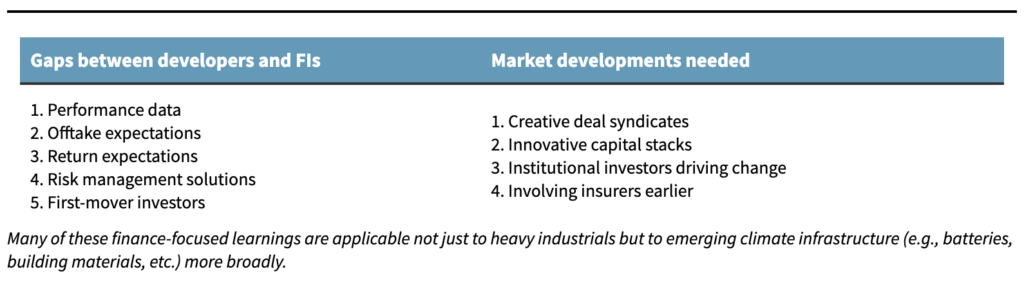
Methodology

RMI produced load curves for managed and unmanaged charging in Los Angeles based on telematic data of real fleets. In this analysis we have scaled these up to model the load curve for a single representative MHDEV depot of around 100 vehicles and then applied LADWP A-3 large commercial rates. The DER analysis was done in part using NREL’s ReOpt tool, an online model that allows users to input their current load profiles, select the rate they are on, and then assess the economic savings and resilience benefits that can be obtained by integrating DERs into their site. This analysis was then supplemented by interviewing fleets, charging station operators, and DER providers who operate across Southern California.

Global Impact

Campaigns

GLOBAL PLATFORM

TRACKING PROGRESS