To connect or not to connect: Demystifying hydrogen power procurement options, risks, and opportunities

Introduction

Electrolytic or “green” hydrogen has garnered significant interest for its potential to reduce emissions across industrial sectors such as steelmaking and fertiliser manufacturing. As the interest in green hydrogen grows, so does the need for robust renewable energy accounting methods to ensure it is produced responsibly.

RMI has emphasised the need for the Inflation Reduction Act’s hydrogen production 45V tax credit to maintain hourly matching over an annual matching to ensure climate-aligned emission profiles. Hourly matching requires hydrogen production to align its electricity consumption with clean electricity generation on a real-time, hourly basis. Annual matching instead aggregates the total electricity consumption on an annual basis, allowing consumers to claim “clean energy” for hours where there is limited clean generation on the grid. Designing projects that are economically viable while achieving consistent clean power is one of the foremost challenges of the energy transition. If hydrogen developers can find a pathway to competitive business models for hourly matched electrolytic hydrogen, they will establish themselves as an example for industrial decarbonisation efforts more broadly.

So far, much of the discourse on this topic has focused on whether the hourly matching requirement in the 45V tax credit guidance should be upheld. The 2024 presidential election increased tax credit uncertainty, but there are still important reasons for developers to pursue hourly matched power procurement. Accessing international markets is still critical to sustaining green hydrogen business models at scale, for example, and even in domestic markets, relaxing emissions standards makes it harder for offtakers to verify the climate attributes of the product. As such, attention should be given to the inherent costs and risks of power procurement and how the market could transform to address them.

The chart below shows the impact on the price of various project configurations adjusted up or down by 30 percent. Many factors have an impact on the price of hydrogen, but the cost of power remains the single largest driver of hydrogen production economics. Additionally, the amount of power procurement needed remains a substantial bankability risk for many projects. Contracting large volumes of power to ensure high quality climate attributes not only exposes projects to power market risk, but also creates a dependency on regulations that could change in the future. Some configurations may be more insulated from these risks than others.

Even well-informed third parties often struggle to challenge claims about the sustainability of these projects and verify the environmental attributes embedded in the final product. The complexity of hydrogen production, project development uncertainties, and the nascency of the industry make it difficult for policymakers and other stakeholders to understand what asset-level configurations are truly feasible within the proposed policy environment.

As part of an effort to better understand barriers to final investment decision (FID) in Gulf Coast Industrial Hubs, RMI, as part of its work with Mission Possible Partnership (MPP), evaluated power procurement risks and challenges for a hypothetical green hydrogen project in Texas and proposed policy and market-based paths forward for green hydrogen. This work is part of RMI and MPP’s U.S. Hubs program, in partnership with the Bezos Earth Fund.

Power configurations and associated risks

Four different archetypes for procuring clean power were examined for the purposes of green hydrogen developments. These are not the only options to configure power for hydrogen projects, but are representative of common selections:

  • Behind-the-Meter (BTM): Hydrogen producer has on-site renewables to provide both Energy Attribute Credits (EACs) and direct transmission of power. The renewable and hydrogen production project can be financed together, or ring fenced through an onsite PPA.
  • Virtual Power Purchase Agreements (vPPAs): The hydrogen producer contracts a vPPA with a renewables developer to receive EACs and a contract for differences (CFD) settlement, or the financial settlement between the market price and the agreed strike price. The hydrogen producer receives all electricity from the grid through a separate contract with the local utility.
  • Offsite Physical Power Purchase Agreements (PPAs): The hydrogen producer receives all electricity from offsite renewables. The renewables developer “passes” renewable electricity (and associated EACs) to the hydrogen project through the utility for a fee paid by the hydrogen project.
  • Hybrid: Projects combine multiple power procurement strategies. For example, a project could opt for a hybrid system with on-site anchor renewables plus a supplemental vPPA to increase resource diversity.
  • Unbundled EAC purchases, decoupled from physical power transactions may be possible for hybrid systems over time, either traded in a market or secured via longer-term contracts.

Risks associated with power procurement

When contracting renewable energy, hydrogen producers must balance the risk of excess production against maintaining supply certainty. Power configurations carry different exposures to the risks and opportunities. For example, behind the meter offers certainty in electricity costs and simplified operations but faces greater weather variability and project dependence. Virtual and physical PPAs can be subject to curtailment and mismatches in hourly production but have the potential for greater resource diversity with hydrogen production and renewables in different locations. Finally, a hybrid configuration can balance the risks but requires more complex alignment between parties. Key risks for each configuration are summarised in the following table and discussed in further detail the subsequent section.

To ensure tax credit compliance, hydrogen developers will need to work with offtakers, regulators, and financial institutions to propose creative solutions through novel contract provisions, project configurations, or additional support to mitigate risks and guarantee high-quality climate attributes. Given the importance of power for electrolytic hydrogen, the following sections will describe some of the risks associated with power procurement and potential solutions.

Risk 1: Weather variability

The challenge

Renewable electricity markets are subject to considerable supply volatility, driven by the variable availability of solar and wind resources. This variability creates a challenge for hydrogen producers aiming to transform renewable resources into stable tax credit revenue for investors and predictable production volumes for offtakers with strict operating constraints.
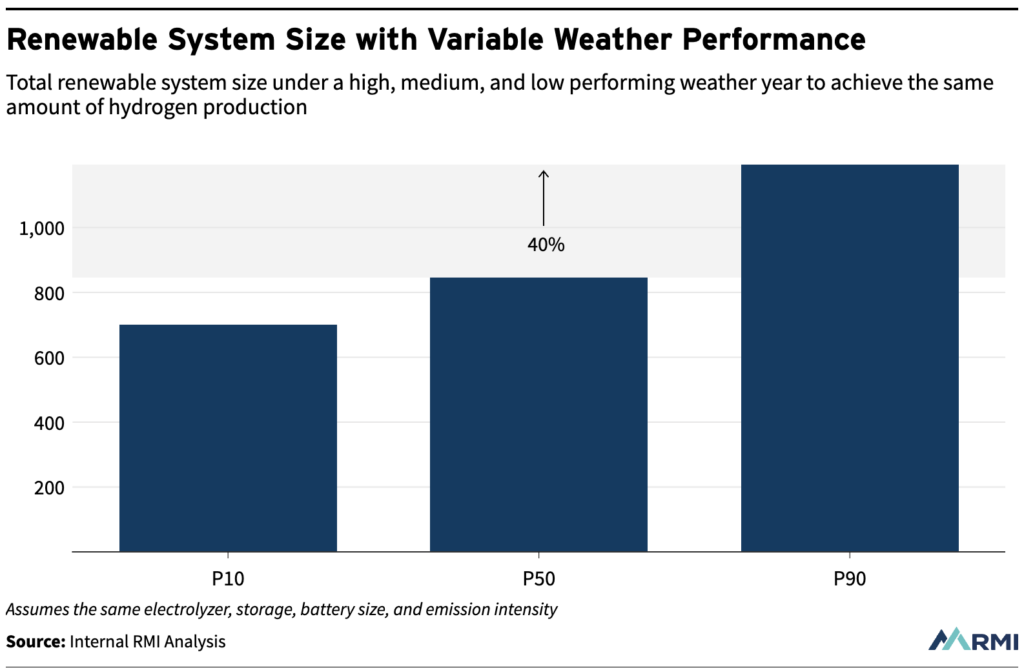
Until other cost reductions and efficiency improvements are achieved, US-based green hydrogen projects will heavily rely on the $3/kg tax credit to maintain economic viability. At the same time, investors require developers to secure upfront offtake contracts to receive financing, and many offtakers require fixed volume delivery due to their own operational limitations. Hydrogen producers must balance fulfilling their fixed offtake obligations with ensuring that every hour of hydrogen production is matched with an hour of clean power consumption to receive the tax credit and guarantee high-quality climate attributes. Producers may choose to structure contracts such that enough power is procured to meet production requirements in the worst weather conditions they may face over the life of the project. As a result, developers may ultimately contract 40 percent more power than they would secure if they planned projects for average weather conditions.

If the system is not sized correctly for poorer weather performance years, reduced renewable capacity factors will force producers to choose between reducing tax credit revenue by using higher carbon intensity grid power, and creating production shortfalls by ramping down their electrolysers, which could violate their contractual obligations. Figure above demonstrates this trade-off. RMI has advocated for the inclusion of an hour-by-hour calculation exception that would reduce the consequences of using grid power to ensure delivery of contracted volumes. The hour-by-hour calculation could preserve the environmental attributes and global competitiveness of the product more effectively than an annual matching approach, while also mitigating the worst consequences of hourly matching. Although conservative renewables contracting could lead to excess production that could be turned into surplus revenue, developers may struggle to monetise the extra volumes in the absence of a liquid market, potentially impacting the bankability of the overall project configuration.

Potential solutions

The challenge of renewable energy variability is not unique to hydrogen. Many other sectors, from data centres to electric utilities themselves, are searching for ways to ensure consistent, reliable power from zero-carbon sources. Some solutions to this challenge may be structural, like pairing oversized hydrogen production systems with electricity or hydrogen storage to store excess power or hydrogen during high-output periods and provide backup during low-output times. However, this kind of solution can be costly and may not lead to a competitive product. First-of-a-kind business model solutions, such as those highlighted below, may be better suited to address this challenge.

  1. Insurance products can provide coverage for losses associated with production shortfalls, performance penalties, or tax credit revenue loss for operational or environmental liabilities. The market for hydrogen-specific insurance is underdeveloped with a potential for high premiums that negatively impact the economics of the solution, but government or concessionary capital support for subsidised premiums, first loss capital for insurance pools, or tax incentives for insurers could catalyse the development of the insurance industry.
  2. Flexible hydrogen contracts with variable offtake agreements can a) empower electrolyser operators to pursue dynamic business models that optimise hydrogen and renewable power sales or b) monetise excess production. Many hydrogen offtakers currently lack the operational flexibility to ramp production but advancements in hydrogen storage or technologies in key offtake sectors could address this gap.
  3. Power guarantees from the renewable developer to provide a minimum quantity of hourly EACs could provide more predictability. However, guarantees may be challenging to negotiate and could increase supply contract costs. The development of secondary power or EAC markets could help optimise the distribution of risk.

Risk 2: Logistic complexity

The challenge

Green hydrogen developers face significant project design and execution complexities, as they navigate construction and operation of renewable power and electrolysis assets. The current 36-months vintage component requires near simultaneous construction of assets, while the hourly matching requirement necessitates closely coordinated operation. This means that both the renewables project and the hydrogen project are dependent on the success of another project that is itself uncertain.

Developers who opt to build behind-the-meter renewables to meet this requirement face a double-sided challenge often referred to as “project on project risk.” In this archetype, hydrogen production is contingent upon the timely completion and operation of the associated renewable project. Likewise, the renewables project is dependent on the timely completion of the hydrogen project for revenue.  If either project experiences delays, the profitability of the other will be at risk. The nascency of the industry creates a high risk that hydrogen projects will not be built on time or will be smaller than originally planned.

Developers who opt for vPPAs or PPAs face a similar challenge, though the risk is spread between the hydrogen and renewables developers. The renewable energy supplier’s financing could face hurdles if the hydrogen project is the sole offtaker. In regions with high-performing renewables, there will also likely be intense competition for resources from other high willingness-to-pay industries. Renewables developers may favour these alternative buyers because hydrogen projects are seen as a risky source of revenue.

In addition to the challenge of simultaneous asset construction, vPPA and PPA configurations must also coordinate simultaneously with the asset operations of the power producer and the offtaker. Electrolyser operators need to juggle multiple data feeds, integrating fluctuating real-time price reports, weather conditions forecasts, and real-time operations data from their renewable energy assets so they can quickly ramp production down if renewables stop producing. Errors in this data could lead to a substantial tax credit loss if renewables stop producing due to forecasting errors or technical malfunctions but the electrolyser continues to consume electricity.

Potential solutions

To mitigate project on project risk:

  1. BTM developers could adopt a phased approach, first constructing renewables and integrating hydrogen production integrated later. This would likely require the developer to find another offtaker for their renewable power to provide revenue before the hydrogen project comes online.
  2. PPA and vPPA developers can explore novel power contracting approaches, such as partnering with existing large buyers, like technology companies, as a paired offtaker. This approach can help mitigate risk for renewable developers by avoiding the uncertainties associated with aligning their projects with an emerging industry like hydrogen.
  3. Cross-collateralisation of a portfolio of smaller first-mover projects could reduce the likelihood that isolated errors in any single project will substantially disrupt cashflows to project owners.

Emerging data management solutions to streamline simultaneous operation risk are already being explored by power market service providers.

Risk 3: Grid volatility & uncertainty

The challenge

Hydrogen project developers with grid-connected projects (vPPA, PPA, or hybrid) can face uncertainty from the short-term, minute-to-minute, hour-to-hour, and month-to-month volatility of the electricity market as well as from the rapidly evolving long-term, year-over-year electricity price environment. To protect against the different temporal dimensions of market volatility, developers can secure physical PPAs or vPPAs, (or opt for behind-the-meter systems, which are largely insulated from all the risks described in this section), but there are trade-offs for either option.

Physical PPAs limit the risk of short-term volatility by delivering power at a pre-determined cost with exposure to wholesale price uncertainty only in the sale of excess contracted power back to the grid. However, in the long term, developers risk their projects becoming uncompetitive if PPA prices significantly decline over time.

vPPA configurations experience greater risk from short-term varying power costs because they are exposed to the wholesale market via the contract for differences settlement (CfD) and to the commercial rates via their physical power purchases from the utility. The CfD settlement, which will provide additional revenue to the hydrogen project when prices are high, creates a hedge against long-term increases in the commercial market price, as long as the wholesale price is driven up by the same factors. However, changes in the grid’s energy sources over time can weaken the correlation between the CfD and the commercial prices creating the potential for hedging strategy failures. The first figure above demonstrates the uncertainty in future price evolution reported by ERCOT itself. The second figure above shows the potential consequences of failing to manage wholesale price volatility. A single month in which the average cost of power is more than $160/MWh, as shown in August of 2023, could do irreparable damage to project economics.

Additionally, grid-connected projects may face significant delays due to interconnection queues, as they depend on timely grid access to start production with EACs. Curtailment risks can further complicate hydrogen production, as solar or wind farms can be forced to scale back operations when grid capacity is exceeded, leaving excess energy unused and potentially missing hours of matching EAC.

Potential solutions

To mitigate grid-related risks, the following market and policy solutions exist:

  1. Build onsite renewable or contract with projects physically close to reduce grid exposure and the risks of curtailment at different nodes within the grid. This can be for part or all the electrolyser capacity but may increase weather variability risk.
  2. Enter contracts with retail energy providers to fix electricity consumption costs. These are likely only widely available in deregulated markets and are subject to term negotiation. They could reduce costs vs traditional retail rates if the developer is able secure value for being a flexible load.
  3. Collaborate with Regional Transmission Organisations and federal or state policymakers to streamline grid interconnection processes and identify areas in the system that would benefit from both additional capacity and a large flexible load like a hydrogen plant.
  4. Support development of spot hourly EACs to provide an additional, more liquid source of hourly EACs to enable production during times of supply-driven curtailment.

Next steps

As tax credit uncertainty increases, developers and offtakers alike must proactively address the risks that will persist regardless of regulatory outcomes. Challenges such as weather variability, logistics complexity, and the future of the grid will endure even after final rules are in place. Many market-driven solutions exist, but these investments are costly, high risk, and have long lead times that may necessitate additional government support. Stakeholders can begin collaborating to identify and mitigate these risks, accelerating project deployment once the guidance is released.

The time is now for zero-emissions cargo handling equipment at America’s busiest cargo ports

Ocean ports around the world represent major sources of coastal air pollution, with fossil fuel-powered ships, trucks, and heavy equipment in use at port terminals.

In Southern California, home to two of the busiest container ports in the county, that pollution is a particularly acute challenge given the proximities to large metropolitan populations. In fact, the Ports of Los Angeles and Long Beach moved more than 16 million TEUs, or nearly 40 percent of imported containers, in the United States in 2023. Those containers include everything from clothes to lifesaving medical equipment. When containers arrive on US shores, they rely on a network of heavy-duty infrastructure known collectively as cargo handling equipment to get them off boats and ultimately into consumer hands.

Cargo handling equipment, also known as container handling equipment, refers to the cranes, top handlers, forklifts, and tractors that load and unload shipping containers on and off boats. Today, most cargo handling equipment runs on diesel. Replacing diesel cargo handling equipment with zero emissions alternatives will improve local air quality and health in neighbouring communities and reduce climate impacts.

RMI and the Mission Possible Partnership analysed the total cost of ownership for four types of cargo handling equipment

But roadblocks remain, including a lack of data to support terminal operators, ports, labor unions, and other key stakeholders in making decisions about technology pathways and plans for needed charging and hydrogen refueling infrastructure.

That’s why RMI and the Mission Possible Partnership analysed the total cost of ownership for four types of cargo handling equipment: to provide stakeholders with an understanding of the zero-emissions technologies available today, how the total cost of battery electric and hydrogen-powered equipment compare with diesel powertrains, and the green electricity and hydrogen needed at the port to power net-zero equipment.

Addressing cargo handling equipment is essential for decarbonising POLA and POLB

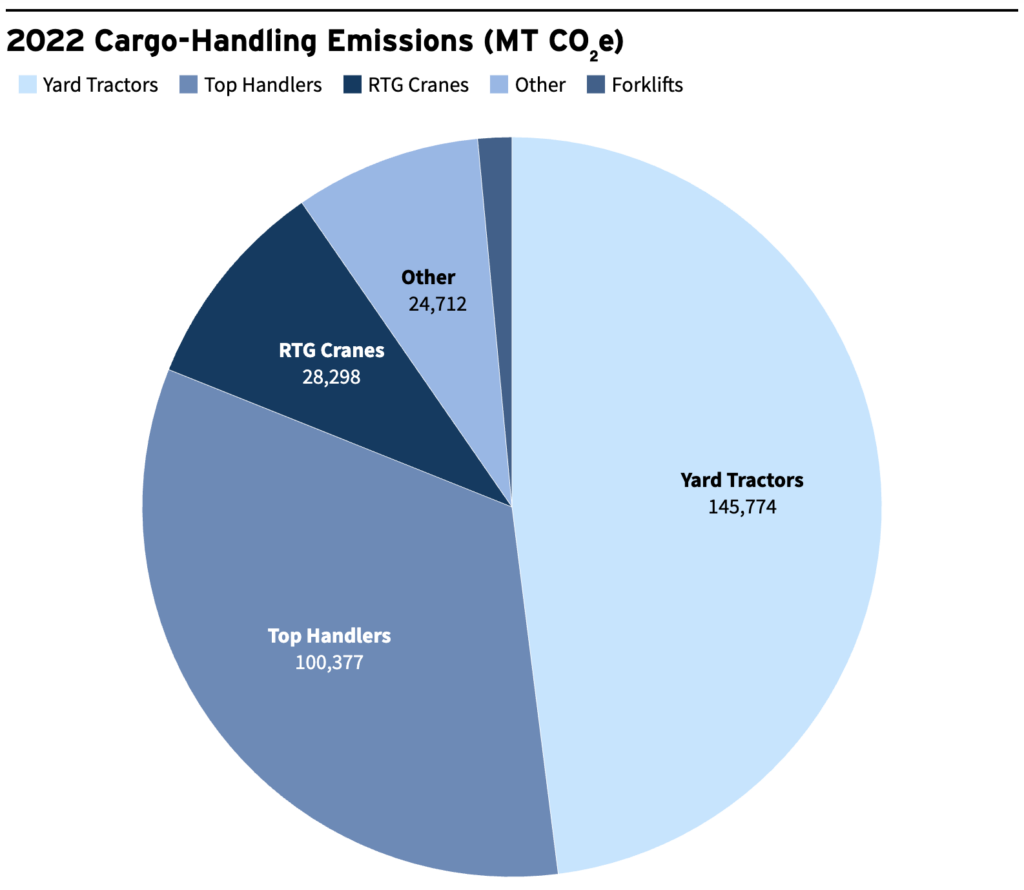
It’s impossible to decarbonise ports without a focus on cargo handling equipment. While most port emissions come from heavy-duty vehicles and ocean-going vessels, cargo handling equipment still accounts for more than 15 percent of port emissions at POLA and POLB. The majority of cargo handling equipment emissions come from two tools: top handlers and yard tractors. Of the more than 3,000 pieces of cargo handling equipment in operation at the ports, yard tractors (48 percent), forklifts (17 percent), top handlers (12 percent), and rubber-tired gantry (RTG) cranes (5 percent) continue to use primarily diesel internal combustion engine technology.

Exhibit 1. Ports of Los Angeles and Long Beach Combined Emissions Profile

Emissions from cargo handling equipment disproportionately impact communities adjacent to the ports who are exposed to elevated levels of toxic air pollution resulting from diesel trucks, idling ships, and cargo handling equipment. In fact, a recent study found nitrogen oxide air pollution emissions were 2.7 times higher and tailpipe-emitted fine particulate matter emissions were 2.2 times higher than certification standards. The neighbourhoods closest to POLA and POLB are designated disadvantaged communities under California SB 535 and the federal Justice 40 Initiative, which allocate public funding to communities that are marginalised by underinvestment and overburdened by pollution.

Many of the technologies exist today — and are only getting better

Several terminal operators at POLA and POLB are already piloting or deploying zero-emissions cargo handling equipment. For example, more than 60 percent of cargo handling equipment at The Long Beach Container Terminal is already electric, and at least seven other terminals have begun or recently concluded pilot programs for battery electric yard tractors or RTG cranes. However, more than three thousand pieces of equipment will need to convert to zero emissions to meet the 2030 net-zero goal.

The good news is technology readiness levels (TRLs) are improving for zero-emissions cargo handling equipment. Across all cargo handling equipment types, battery electric powertrains have the highest TRL when considering battery electric and hydrogen fuel cell solutions across four types of cargo handling equipment. However, it’s important to note that other factors including space constraints, operational profiles, electricity and hydrogen distribution infrastructure availability, and labour/end-user preferences all influence operator technology choice.

Exhibit 2. Technology readiness levels for battery electric and hydrogen fuel cell cargo handling equipment by type

Zero-emissions yard tractors and RTG cranes are cost-competitive with diesel today

As technologies improve, zero-emissions cargo handling equipment is becoming cost-competitive with its diesel-powered counterparts.

RMI and MPP calculated the 12-year total cost of ownership (TCO) of the four equipment types, considering diesel, electric, and hydrogen powertrains for each. The TCO considers upfront vehicle purchase price and infrastructure costs as well as long-term factors such as maintenance and fuel. California state incentives offered through the Low Carbon Fuel Standard (LCFS) program and Clean Off-Road Equipment (CORE) Voucher Incentive Project are also included.

Exhibit 3. 12-year total cost of ownership (TCO) of four cargo handling equipment types, considering diesel, electric, and hydrogen powertrains – Click to view the table full size

We find that zero-emissions yard tractors and RTG cranes are cost-competitive with diesel today (Exhibit 3).

Overall, hydrogen powertrains appear economically competitive with battery-electric models for yard tractors and high-capacity forklifts, with hydrogen top handlers being significantly more expensive than their electric counterparts. The TCO of hydrogen RTG cranes was not evaluated due to that market segment already being captured by electric models.

Hydrogen yard tractors require more fuel expenditure than electric models, but this cost can be offset because hydrogen units benefit from lower upfront purchase prices after incentives are applied, making both powertrains competitive with diesel. Electric and hydrogen top handlers are both more expensive than diesel due to their large upfront pricing not being sufficiently mitigated by purchase incentives. Hydrogen forklifts are competitive with electric due to reduced infrastructure costs, but both alternative fuel vehicles are much more expensive than diesel, largely due to high upfront purchase prices. Electric RTG cranes are competitive with diesel due to the technology’s maturity and the support of purchase incentives.

However, these findings need to be verified with additional study. Publicly available data on model pricing and maintenance costs are sparse, with hydrogen fuel prices and infrastructure costs also largely uncertain.

Public and private finance can come together to enable turnover of cargo handling equipment

Across the fleet of cargo handling equipment at the San Pedro Bay Ports, RMI analysis shows replacement or conversion of remaining CHE to zero-emissions will cost more than $2.5 billion depending on the split between hydrogen and electric equipment. Results from the same analysis of total costs across POLA and POLB under a mixed scenario — comprising both hydrogen and electric powertrain replacements for existing equipment — would require more than $1 billion to replace 1,500 yard tractors and more than $900 million to replace 400 top-handlers. By comparison, of POLA’s $2.6 billion annual budget, only $15 million is allocated toward zero-emissions port electrification.

Terminal operators and other developers can leverage incentives and research tools like the RMI DIRT tool to identify appropriate cost-saving measures to reduce costs on the path to net zero. Federal tax incentives for the purchase of qualifying new equipment can reduce the per-unit capital expenditure by up to $40,000 even before factoring in upstream production and manufacturing tax credits from the Inflation Reduction Act. California has additional incentives that can reduce the purchase price of new cargo handling equipment by 30 to 55 percent, depending on the vehicle and powertrain.

Additionally, many terminals at US ports are owned by financial institutions or beneficial cargo owners (BCO) who can leverage private capital for the transition. For example, financial institution owners of port terminals could leverage collateralised loans or OEM-backed financing for equipment purchases across multiple facilities to reduce procurement costs. Additionally, common facility ownership at ports presents an opportunity to jointly procure equipment, creating economies of scale.

Systems planning for green electricity and hydrogen must start now to meet the ports’ 2030 goal

Replacing existing diesel cargo handling equipment with net-zero alternatives will require significant volumes of green electricity and/or green hydrogen to be delivered to ports.

Upgrades will be necessary for electrical grid infrastructure serving the ports to accommodate the increased load from recharging hundreds of pieces of equipment, like the upgrades Southern California Edison are already planning for a new transmission-level substation and other grid enhancements to serve an expected increase in demand at POLB. Infrastructure for hydrogen delivery and refuelling will also be necessary to ensure cost-effective delivery of zero-emissions fuel.

Terminal operators may also face site constraints in addition to limited electric capacity. Electric refuelling infrastructure often requires more space than diesel pumps because one electric charger supports fewer vehicles than a diesel pump. These chargers can also present a spike in site-wide power usage, and the lead time for getting the power capacity upgrades at a site to support charger installation can be significant. Similarly, building hydrogen refuelling infrastructure and securing low-cost hydrogen will require coordination across terminal operators and other buyers of hydrogen for trucking and shipping.

Conclusion: Decarbonising goods movement in the United States and beyond

Converting to zero-emissions cargo handling equipment is just one piece of decarbonising ports and goods movement. Actors across the value chain — beneficial cargo owners, terminal operators, ports, OEMs, utilities, and energy suppliers — all have a role to play in ensuring a rapid and cost-effective transition. Further, environmental justice groups are advocating for a transition away from diesel, while labour groups are working to ensure the transition does not displace union jobs. Cargo owners are increasingly interested in choosing carriers with more sustainable operations, creating pressure for fleets to decarbonise.

Maritime trade will continue to be an essential part of our modern way of life, but we can diminish its climate impact. Reducing port emissions in the United States and globally is essential to meeting climate goals, decarbonising goods movement, and reducing harmful pollution in neighbouring communities.


About Clean Industrial Hubs

The insights discussed above come from Mission Possible Partnership and RMI’s Clean Industrial Hub in Los Angeles, California, which accelerates industrial and heavy transportation decarbonisation in the region. Clean industrial hubs bring together policymakers, financial institutions, project developers, and community-based organisations to enable ground-breaking decarbonisation projects in the hardest-to-abate sectors. In Los Angeles, MPP and RMI’s analyses, convenings, and tools support stakeholders working to advance zero-emissions trucking, low-carbon cement plants, sustainable aviation fuel, and decarbonised ports by increasing the size, scale, and speed of critical climate investments that benefit the environment, the economy, and communities. This work is done in partnership with the Bezos Earth Fund.

Unlocking green industrial growth report

View report | Unlocking green industrial growth

Our on the ground experience supporting project developers in California and Texas has led us to
uncover five critical insights on how to unlock investment in green industrial projects globally:

Technology
An economically viable path to decarbonisation is in sight in some sectors.

Demand
Projects which rely on mandates progress faster due to an even playing field and longer-term demand certainty.

Infrastructure
Achieving decarbonisation goals for industry will require a rapid buildout of industrial assets and infrastructure.

Communities
Community engagement is critical to project success and innovative tools can elevate engagement.

Finance
Financiers must explore more innovative deal structuring to efficiently share risks in complex projects.

View report | Unlocking green industrial growth

Unlocking first-of-a-find projects through Clean Industrial Hubs

Heavy industry is on the brink of a major transformation. Developing low-emissions products and decarbonizing existing industrial facilities can increase domestic and global economies, protect energy security and resilience, create hundreds of thousands of jobs, and improve the quality of life for people across the planet by reducing pollution and supporting global climate goals.

Enabling the triple bottom line of economy, community, and environment requires a tremendous investment in new projects this decade. Trillions of dollars of capital will be needed in industry and transportation. But financing alone is not enough. Building these projects requires a collaborative ecosystem of project developers, policymakers, community organizations, and financiers to support innovation, sustainability, and economic growth.

Heavy industry and transportation sectors — cement, steel, aluminium, chemical production, aviation, shipping, and trucking — together generate more than 30% of global greenhouse gas (GHG) emissions. Meeting global climate goals will require building more than 700 net-zero industrial projects and deploying 7 million zero-emissions trucks by 2030.1 So far, just 12% of these projects are operational. Most will be in regional industrial hubs, or clusters, where there is a concentration of existing industrial activity and where the physical, social, regulatory, and economic infrastructure is in place to support rapid scale-up. Today, first-of-a-kind (FOAK) and nth-of-a-kind (NOAK) decarbonization projects face tremendous hurdles, but our on-the-ground experience and research show there is a key to unlocking them.

From August 2022 to December 2024, Mission Possible Partnership and RMI, with support from the Bezos Earth Fund, accelerated the development of clean industrial hubs in California and Texas, directly partnering with 18 FOAK clean industrial projects to grow regional economies, strengthen local workforces, and protect energy security while reducing industry’s environmental impacts.

Clean industrial hubs bring together project developers, policymakers, financial institutions, and community-based organizations to advance regional clusters of clean energy and industrial decarbonization projects. These stakeholders work together to benefit the local economy by sharing infrastructure, creating demand for low-emissions fuels and materials, and implementing innovative technology while minimizing environmental impact. Clean industrial hubs help spur economic growth, create employment opportunities, and unlock new technologies.

Unlocking First-of-a-kind projects through clean industrial hubs | report

Launched May 2025, a new report from Mission Possible Partnership (MPP) in collaboration with RMI reveals that clean hubs can be a key driver to industrial transformation.

From 2022 to 2024, Mission Possible Partnership and RMI, with support from the Bezos Earth Fund, accelerated the development of clean industrial hubs in California and Texas, partnering with 18 first-of-a-kind clean industrial projects. The findings are significant: 50% of projects reached a final investment decision (FID) – marking the point which a project receives a green light for full-scale development and operationalisation by 2030 – compared with 20% globally.

READ | Unlocking First-of-a-Kind Projects through Clean Industrial Hubs report

Executive summary extract: Heavy industry is on the brink of a major transformation. Developing low-emissions products and decarbonizing existing industrial facilities can increase domestic and global economies, protect energy security and resilience, create hundreds of thousands of jobs, and improve the quality of life for people across the planet by reducing pollution and supporting global climate goals.

Enabling the triple bottom line of economy, community, and environment requires a tremendous investment in new projects this decade. Trillions of dollars of capital will be needed in industry and transportation. But financing alone is not enough. Building these projects requires a collaborative ecosystem of project developers, policymakers, community organizations, and financiers to support innovation, sustainability, and economic growth.

Heavy industry and transportation sectors — cement, steel, aluminium, chemical production, aviation, shipping, and trucking — together generate more than 30% of global greenhouse gas (GHG) emissions. Meeting global climate goals will require building more than 700 net-zero industrial projects and deploying 7 million zero-emissions trucks by 2030. So far, just 12% of these projects are operational. Most will be in regional industrial hubs, or clusters, where there is a concentration of existing industrial activity and where the physical, social, regulatory, and economic infrastructure is in place to support rapid scale-up. Today, first-of-a-kind (FOAK) and nth-of-a-kind (NOAK) decarbonization projects face tremendous hurdles, but our on-the-ground experience and research show there is a key to unlocking them.

From August 2022 to December 2024, Mission Possible Partnership and RMI, with support from the Bezos Earth Fund, accelerated the development of clean industrial hubs in California and Texas, directly partnering with 18 FOAK clean industrial projects to grow regional economies, strengthen local workforces, and protect energy security while reducing industry’s environmental impacts.

Clean industrial hubs bring together project developers, policymakers, financial institutions, and community-based organizations to advance regional clusters of clean energy and industrial decarbonization projects. These stakeholders work together to benefit the local economy by sharing infrastructure, creating demand for low-emissions fuels and materials, and implementing innovative technology while minimizing environmental impact. Clean industrial hubs help spur economic growth, create employment opportunities, and unlock new technologies.

Their impact can be significant: 50% of the 18 projects we supported reached a final investment decision (FID), compared with 20% globally. Once built, these projects will additionally mobilize $34 billion of public and private investment and reduce emissions by half a billion tons of carbon dioxide equivalent (CO2e) by 2050. A successful clean industrial hub includes three main components: a supportive ecosystem, a variety of decarbonization and clean energy projects, and reliable connective infrastructure.

This report shares insights from the development of these clean industrial hubs and demonstrates how participating in a hub enhances outcomes for projects, the climate, and communities. It details how creating an enabling ecosystem of private finance, public policy, and community engagement is essential to de-risk projects and help innovative first movers. It also documents steps to take to successfully develop a clean industrial hub.

Read | Unlocking First-of-a-kind projects through clean industrial hubs

Unlocking green industrial growth report

View report | Unlocking green industrial growth

Our on the ground experience supporting project developers in California and Texas has led us to
uncover five critical insights on how to unlock investment in green industrial projects globally:

Technology
An economically viable path to decarbonisation is in sight in some sectors.

Demand
Projects which rely on mandates progress faster due to an even playing field and longer-term demand certainty.

Infrastructure
Achieving decarbonisation goals for industry will require a rapid buildout of industrial assets and infrastructure.

Communities
Community engagement is critical to project success and innovative tools can elevate engagement.

Finance
Financiers must explore more innovative deal structuring to efficiently share risks in complex projects.

View report | Unlocking green industrial growth

Unlocking first-of-a-find projects through Clean Industrial Hubs

Heavy industry is on the brink of a major transformation. Developing low-emissions products and decarbonizing existing industrial facilities can increase domestic and global economies, protect energy security and resilience, create hundreds of thousands of jobs, and improve the quality of life for people across the planet by reducing pollution and supporting global climate goals.

Enabling the triple bottom line of economy, community, and environment requires a tremendous investment in new projects this decade. Trillions of dollars of capital will be needed in industry and transportation. But financing alone is not enough. Building these projects requires a collaborative ecosystem of project developers, policymakers, community organizations, and financiers to support innovation, sustainability, and economic growth.

Heavy industry and transportation sectors — cement, steel, aluminium, chemical production, aviation, shipping, and trucking — together generate more than 30% of global greenhouse gas (GHG) emissions. Meeting global climate goals will require building more than 700 net-zero industrial projects and deploying 7 million zero-emissions trucks by 2030.1 So far, just 12% of these projects are operational. Most will be in regional industrial hubs, or clusters, where there is a concentration of existing industrial activity and where the physical, social, regulatory, and economic infrastructure is in place to support rapid scale-up. Today, first-of-a-kind (FOAK) and nth-of-a-kind (NOAK) decarbonization projects face tremendous hurdles, but our on-the-ground experience and research show there is a key to unlocking them.

From August 2022 to December 2024, Mission Possible Partnership and RMI, with support from the Bezos Earth Fund, accelerated the development of clean industrial hubs in California and Texas, directly partnering with 18 FOAK clean industrial projects to grow regional economies, strengthen local workforces, and protect energy security while reducing industry’s environmental impacts.

Clean industrial hubs bring together project developers, policymakers, financial institutions, and community-based organizations to advance regional clusters of clean energy and industrial decarbonization projects. These stakeholders work together to benefit the local economy by sharing infrastructure, creating demand for low-emissions fuels and materials, and implementing innovative technology while minimizing environmental impact. Clean industrial hubs help spur economic growth, create employment opportunities, and unlock new technologies.

How to prepare the grid for electric medium- and heavy-duty trucks: Lessons from Los Angeles

Los Angeles (LA) is a hub of freight activity — more than $512 billion in cargo moves through its ports and main airport (LAX) every year. From heavy-duty (HD) trucks beginning long-haul trips to box trucks delivering goods across the city, a wide variety of vehicles contribute to local freight movement. And all of that freight movement contributes to LA having the worst ozone pollution in the nation. Electrifying trucks will help the city reduce overall ozone levels as well as some of the particulate matter (PM) along the interstate 405 and 110 corridors. The air pollution along these highways contributes to the disproportionate amounts of asthma and heart disease in many of the nearby low-to-moderate income neighbourhoods.

One barrier to medium- and heavy-duty (MDHD) truck electrification is LA’s charging infrastructure: the city’s growing number of electric MDHD trucks will need many more chargers. By 2030, these trucks will need as much as 22 megawatts (MW) in some local areas. New analysis from RMI and the Mission Possible Partnership shows stakeholders how to meet that demand.

Fleets, utilities, local government, and charging as a service (CaaS) providers all know that preparing the grid for increased power demand will require grid upgrades and the installation of new chargers, which will take years to deploy.

As fleets wait for these updates, they can take advantage of a complementary solution: managed charging, a proactive, controlled charging strategy that benefits the customer and electric grid. By revisiting their charging practices, trucking fleets can reduce pressure on today and tomorrow’s grid, meet their current and future charging needs, and save money.

Implementing these solutions — upgrading the grid, installing new chargers, and improving current charging operations — will require intense collaboration between stakeholders and robust data and analysis.

Specifically, they’ll need to know where and when MDHD trucks currently operate, where future power demand will be, and how this demand will impact the grid. With this information they can make decisions that will meet the power needs of electric trucks as quickly and cost-effectively as possible.

A new analysis from RMI and the Mission Possible Partnership (MPP) provides these critical insights. Using Geotab Altitude truck travel data in LA, the analysis can help stakeholders identify areas where new chargers and CaaS solutions will have the greatest impact. It also shows how fleets can use managed charging, a demand flexibility strategy that minimizes charging load during peak demand times, to reduce pressure on the grid while also saving money.

Below, we outline our findings and their implications for truck electrification stakeholders.

Where and when will electric truck power demand be greatest?

Areas with the largest power demand include LA’s ports and its downtown, as well as the city of San Fernando. While many vehicle types are active in these areas, there is a notable concentration of HD truck activity at the Ports of LA and Long Beach, with medium-duty (MD) trucks having more activity downtown.

Both MD and HD trucks have similar usage patterns. Both vehicle types tend to return to their depots around 4 p.m., contributing to the highest unmanaged load peaks at that time. However, their schedules diverge later in the day. HD trucks are more likely to return to their depots late at night and into the early morning, while MD trucks have shorter operational windows for their duty cycles. Additionally, HD trucks consume more power overall and tend to drive more miles per day (roughly 115 miles for urban HD trucks compared to 75 miles for urban MD trucks).

Where should stakeholders prioritize charging deployment?

Areas with high projected power demand are the same as those where truck logistics facilities exist today, making these locations valuable not only for grid operators anticipating new electric loads but also for stakeholders identifying sites for CaaS facilities. These sites provide fast or multi-hour charging options for fleets that need a quick boost or a reliable daily charging solution.

While CaaS may cost a fleet more than owning and operating its own charging infrastructure, it offers valuable benefits for fleets that are unable to charge at their home base. This includes fleets with short facility leases that may not want to invest in charging equipment that is hard to move to a new site, as well as fleets that may not have enough depot space to install new chargers. Strategically placing CaaS facilities in areas with both grid capacity and high trucking demand maximizes the value of those facilities and ensures electric trucks remain feasible. Our analysis shown in the map of LA above can help utilities, local governments, and CaaS providers work together to create effective, well-located charging hubs. Identifying demand is a crucial step but so is working with local communities to ensure that a CaaS site is a good neighbour.

Maximizing today’s grid: Why fleets should transition to managed charging

Managed charging is a powerful way for fleets to power their electric trucks. By changing where, when, and how they charge, they can improve operations, save money, and reduce pressure on the grid. And since managed charging better leverages existing infrastructure, they won’t have to worry about how to power their vehicles as they wait for infrastructure upgrades, which may take years to implement.

The first step in transitioning to managed charging is to understand how often trucks are used. Our research found that the median truck has 15 hours of downtime per day and that, even on busy days, trucks are not used 24 hours.

The next step involves adjusting at what time trucks should be parked at their depots. Charging at off-peak hours, like overnight, is more cost-effective than charging during peak hours. And when trucks charge overnight, they can charge slowly, which is more energy efficient and requires less expensive hardware.

In LA, afternoons are also off-peak periods, when lower demand and high solar production often create excess available energy.

What’s the potential load reduction?

Getting more usage out of surplus grid capacity can spread the high fixed costs of infrastructure upgrades over more hours, which ultimately can lower the cost of electricity for all users. For instance, if a location normally has a 19 MW load, slow charging all vehicles would reduce that load to 14 MW. Similarly, overnight charging would yield a 22 MW load, but this load would only occur after 9 p.m., when the grid generally has capacity and when power is cheaper. These numbers are specific to the analyzed area with the highest unmanaged power demand in this study, but the larger trends will be comparable in other areas as well.

The real world will undoubtedly deviate from our model. For example, results from the North American Council on Freight Efficiency (NACFE) and RMI’s Run on Less Electric DEPOT show, some fleets will maximize use of electric trucks since their operational costs are lower, potentially charging during peak hours. These charging strategies presented above are the ends of a spectrum, with likely future load curves somewhere in the middle. However, by understanding what is possible in terms of mitigating peak demand and anticipating the magnitude of these loads, ps utilities can plan for grid upgrades, help charging providers identify where charging infrastructure can make the most impact, and work toward the least-cost solution.

What’s next

Understanding where vehicles operate, where charging infrastructure is needed, and how to optimize electricity usage during off-peak times is a crucial step for any community, government, or utility planning a smooth transition to electric trucks. Utilities that can confidently predict the size and location of future demand can enable faster fleet electrification while keeping costs down for all customers. Local governments can play a key role by offering land or incentives to support CaaS facilities, ensuring that small fleets and those without depot charging capabilities are not left behind in the transition to cleaner freight systems.

Electrifying freight vehicles in LA offers significant benefits but the resulting power demands must be carefully anticipated and managed to support the grid while keeping costs in check. While fleets have various charging options — including the ability to charge away from depots — these choices will directly shape the impact of EV trucking on the grid.

This analysis helps pinpoint where utilities, local governments, and charging developers should focus their efforts. By aligning utility planners, fleets, policymakers, and developers, LA can create resilient infrastructure that reduces emissions, improves air quality, and accelerates the shift to a cleaner freight system in one of the country’s busiest logistics hubs.


Methodology

The above map uses Geotab telematics data to forecast EV power loads for 2030 across the city of Los Angeles. Geotab analyses trip data for commercial fleets, computing aggregate statistics for vehicle driving behaviour and domiciling characteristics. Information such as daily vehicle miles travelled (VMT) and domicile times are used to build hourly load curves for medium- and heavy-duty trucks, with peak loads calculated for individual local areas. Vehicle populations are determined from VMT registration data and assumed to be distributed across the city at the same density as domiciling stop frequency. It is also assumed that fleets electrify at rates comparable to ACF compliance milestones, comparable to other research projecting that 13% of heavy-duty fleet vehicles will be electrified by 2030.

About Clean Industrial Hubs

The insights discussed above come from Mission Possible Partnership and RMI’s Clean Industrial Hub in Los Angeles, California, that accelerates industrial and heavy transportation decarbonization in the region. Clean industrial hubs bring together policymakers, financial institutions, project developers, and community-based organizations to enable ground-breaking decarbonization projects in the hardest-to-abate sectors. In Los Angeles, RMI and MPP’s analyses, convenings, and tools support stakeholders working to advance zero-emissions trucking, low-carbon cement plants, sustainable aviation fuel, and decarbonized ports, by increasing the size, scale, and speed of critical climate investments that benefit the environment, the economy, and communities. This work is done in partnership with the Bezos Earth Fund.

To connect or not to connect: Demystifying hydrogen power procurement options, risks, and opportunities

Introduction

Electrolytic or “green” hydrogen has garnered significant interest for its potential to reduce emissions across industrial sectors such as steelmaking and fertiliser manufacturing. As the interest in green hydrogen grows, so does the need for robust renewable energy accounting methods to ensure it is produced responsibly.

RMI has emphasised the need for the Inflation Reduction Act’s hydrogen production 45V tax credit to maintain hourly matching over an annual matching to ensure climate-aligned emission profiles. Hourly matching requires hydrogen production to align its electricity consumption with clean electricity generation on a real-time, hourly basis. Annual matching instead aggregates the total electricity consumption on an annual basis, allowing consumers to claim “clean energy” for hours where there is limited clean generation on the grid. Designing projects that are economically viable while achieving consistent clean power is one of the foremost challenges of the energy transition. If hydrogen developers can find a pathway to competitive business models for hourly matched electrolytic hydrogen, they will establish themselves as an example for industrial decarbonisation efforts more broadly.

So far, much of the discourse on this topic has focused on whether the hourly matching requirement in the 45V tax credit guidance should be upheld. The 2024 presidential election increased tax credit uncertainty, but there are still important reasons for developers to pursue hourly matched power procurement. Accessing international markets is still critical to sustaining green hydrogen business models at scale, for example, and even in domestic markets, relaxing emissions standards makes it harder for offtakers to verify the climate attributes of the product. As such, attention should be given to the inherent costs and risks of power procurement and how the market could transform to address them.

The chart below shows the impact on the price of various project configurations adjusted up or down by 30 percent. Many factors have an impact on the price of hydrogen, but the cost of power remains the single largest driver of hydrogen production economics. Additionally, the amount of power procurement needed remains a substantial bankability risk for many projects. Contracting large volumes of power to ensure high quality climate attributes not only exposes projects to power market risk, but also creates a dependency on regulations that could change in the future. Some configurations may be more insulated from these risks than others.

Even well-informed third parties often struggle to challenge claims about the sustainability of these projects and verify the environmental attributes embedded in the final product. The complexity of hydrogen production, project development uncertainties, and the nascency of the industry make it difficult for policymakers and other stakeholders to understand what asset-level configurations are truly feasible within the proposed policy environment.

As part of an effort to better understand barriers to final investment decision (FID) in Gulf Coast Industrial Hubs, RMI, as part of its work with Mission Possible Partnership (MPP), evaluated power procurement risks and challenges for a hypothetical green hydrogen project in Texas and proposed policy and market-based paths forward for green hydrogen. This work is part of RMI and MPP’s U.S. Hubs program, in partnership with the Bezos Earth Fund.

Power configurations and associated risks

Four different archetypes for procuring clean power were examined for the purposes of green hydrogen developments. These are not the only options to configure power for hydrogen projects, but are representative of common selections:

  • Behind-the-Meter (BTM): Hydrogen producer has on-site renewables to provide both Energy Attribute Credits (EACs) and direct transmission of power. The renewable and hydrogen production project can be financed together, or ring fenced through an onsite PPA.
  • Virtual Power Purchase Agreements (vPPAs): The hydrogen producer contracts a vPPA with a renewables developer to receive EACs and a contract for differences (CFD) settlement, or the financial settlement between the market price and the agreed strike price. The hydrogen producer receives all electricity from the grid through a separate contract with the local utility.
  • Offsite Physical Power Purchase Agreements (PPAs): The hydrogen producer receives all electricity from offsite renewables. The renewables developer “passes” renewable electricity (and associated EACs) to the hydrogen project through the utility for a fee paid by the hydrogen project.
  • Hybrid: Projects combine multiple power procurement strategies. For example, a project could opt for a hybrid system with on-site anchor renewables plus a supplemental vPPA to increase resource diversity.
  • Unbundled EAC purchases, decoupled from physical power transactions may be possible for hybrid systems over time, either traded in a market or secured via longer-term contracts.

Risks associated with power procurement

When contracting renewable energy, hydrogen producers must balance the risk of excess production against maintaining supply certainty. Power configurations carry different exposures to the risks and opportunities. For example, behind the meter offers certainty in electricity costs and simplified operations but faces greater weather variability and project dependence. Virtual and physical PPAs can be subject to curtailment and mismatches in hourly production but have the potential for greater resource diversity with hydrogen production and renewables in different locations. Finally, a hybrid configuration can balance the risks but requires more complex alignment between parties. Key risks for each configuration are summarised in the following table and discussed in further detail the subsequent section.

To ensure tax credit compliance, hydrogen developers will need to work with offtakers, regulators, and financial institutions to propose creative solutions through novel contract provisions, project configurations, or additional support to mitigate risks and guarantee high-quality climate attributes. Given the importance of power for electrolytic hydrogen, the following sections will describe some of the risks associated with power procurement and potential solutions.

Risk 1: Weather variability

The challenge

Renewable electricity markets are subject to considerable supply volatility, driven by the variable availability of solar and wind resources. This variability creates a challenge for hydrogen producers aiming to transform renewable resources into stable tax credit revenue for investors and predictable production volumes for offtakers with strict operating constraints.

Until other cost reductions and efficiency improvements are achieved, US-based green hydrogen projects will heavily rely on the $3/kg tax credit to maintain economic viability. At the same time, investors require developers to secure upfront offtake contracts to receive financing, and many offtakers require fixed volume delivery due to their own operational limitations. Hydrogen producers must balance fulfilling their fixed offtake obligations with ensuring that every hour of hydrogen production is matched with an hour of clean power consumption to receive the tax credit and guarantee high-quality climate attributes. Producers may choose to structure contracts such that enough power is procured to meet production requirements in the worst weather conditions they may face over the life of the project. As a result, developers may ultimately contract 40 percent more power than they would secure if they planned projects for average weather conditions.

If the system is not sized correctly for poorer weather performance years, reduced renewable capacity factors will force producers to choose between reducing tax credit revenue by using higher carbon intensity grid power, and creating production shortfalls by ramping down their electrolysers, which could violate their contractual obligations. Figure above demonstrates this trade-off. RMI has advocated for the inclusion of an hour-by-hour calculation exception that would reduce the consequences of using grid power to ensure delivery of contracted volumes. The hour-by-hour calculation could preserve the environmental attributes and global competitiveness of the product more effectively than an annual matching approach, while also mitigating the worst consequences of hourly matching. Although conservative renewables contracting could lead to excess production that could be turned into surplus revenue, developers may struggle to monetise the extra volumes in the absence of a liquid market, potentially impacting the bankability of the overall project configuration.

Potential solutions

The challenge of renewable energy variability is not unique to hydrogen. Many other sectors, from data centres to electric utilities themselves, are searching for ways to ensure consistent, reliable power from zero-carbon sources. Some solutions to this challenge may be structural, like pairing oversized hydrogen production systems with electricity or hydrogen storage to store excess power or hydrogen during high-output periods and provide backup during low-output times. However, this kind of solution can be costly and may not lead to a competitive product. First-of-a-kind business model solutions, such as those highlighted below, may be better suited to address this challenge.

  1. Insurance products can provide coverage for losses associated with production shortfalls, performance penalties, or tax credit revenue loss for operational or environmental liabilities. The market for hydrogen-specific insurance is underdeveloped with a potential for high premiums that negatively impact the economics of the solution, but government or concessionary capital support for subsidised premiums, first loss capital for insurance pools, or tax incentives for insurers could catalyse the development of the insurance industry.
  2. Flexible hydrogen contracts with variable offtake agreements can a) empower electrolyser operators to pursue dynamic business models that optimise hydrogen and renewable power sales or b) monetise excess production. Many hydrogen offtakers currently lack the operational flexibility to ramp production but advancements in hydrogen storage or technologies in key offtake sectors could address this gap.
  3. Power guarantees from the renewable developer to provide a minimum quantity of hourly EACs could provide more predictability. However, guarantees may be challenging to negotiate and could increase supply contract costs. The development of secondary power or EAC markets could help optimise the distribution of risk.

Risk 2: Logistic complexity

The challenge

Green hydrogen developers face significant project design and execution complexities, as they navigate construction and operation of renewable power and electrolysis assets. The current 36-months vintage component requires near simultaneous construction of assets, while the hourly matching requirement necessitates closely coordinated operation. This means that both the renewables project and the hydrogen project are dependent on the success of another project that is itself uncertain.

Developers who opt to build behind-the-meter renewables to meet this requirement face a double-sided challenge often referred to as “project on project risk.” In this archetype, hydrogen production is contingent upon the timely completion and operation of the associated renewable project. Likewise, the renewables project is dependent on the timely completion of the hydrogen project for revenue.  If either project experiences delays, the profitability of the other will be at risk. The nascency of the industry creates a high risk that hydrogen projects will not be built on time or will be smaller than originally planned.

Developers who opt for vPPAs or PPAs face a similar challenge, though the risk is spread between the hydrogen and renewables developers. The renewable energy supplier’s financing could face hurdles if the hydrogen project is the sole offtaker. In regions with high-performing renewables, there will also likely be intense competition for resources from other high willingness-to-pay industries. Renewables developers may favour these alternative buyers because hydrogen projects are seen as a risky source of revenue.

In addition to the challenge of simultaneous asset construction, vPPA and PPA configurations must also coordinate simultaneously with the asset operations of the power producer and the offtaker. Electrolyser operators need to juggle multiple data feeds, integrating fluctuating real-time price reports, weather conditions forecasts, and real-time operations data from their renewable energy assets so they can quickly ramp production down if renewables stop producing. Errors in this data could lead to a substantial tax credit loss if renewables stop producing due to forecasting errors or technical malfunctions but the electrolyser continues to consume electricity.

Potential solutions

To mitigate project on project risk:

  1. BTM developers could adopt a phased approach, first constructing renewables and integrating hydrogen production integrated later. This would likely require the developer to find another offtaker for their renewable power to provide revenue before the hydrogen project comes online.
  2. PPA and vPPA developers can explore novel power contracting approaches, such as partnering with existing large buyers, like technology companies, as a paired offtaker. This approach can help mitigate risk for renewable developers by avoiding the uncertainties associated with aligning their projects with an emerging industry like hydrogen.
  3. Cross-collateralisation of a portfolio of smaller first-mover projects could reduce the likelihood that isolated errors in any single project will substantially disrupt cashflows to project owners.

Emerging data management solutions to streamline simultaneous operation risk are already being explored by power market service providers.

Risk 3: Grid volatility & uncertainty

The challenge

Hydrogen project developers with grid-connected projects (vPPA, PPA, or hybrid) can face uncertainty from the short-term, minute-to-minute, hour-to-hour, and month-to-month volatility of the electricity market as well as from the rapidly evolving long-term, year-over-year electricity price environment. To protect against the different temporal dimensions of market volatility, developers can secure physical PPAs or vPPAs, (or opt for behind-the-meter systems, which are largely insulated from all the risks described in this section), but there are trade-offs for either option.

Physical PPAs limit the risk of short-term volatility by delivering power at a pre-determined cost with exposure to wholesale price uncertainty only in the sale of excess contracted power back to the grid. However, in the long term, developers risk their projects becoming uncompetitive if PPA prices significantly decline over time.

vPPA configurations experience greater risk from short-term varying power costs because they are exposed to the wholesale market via the contract for differences settlement (CfD) and to the commercial rates via their physical power purchases from the utility. The CfD settlement, which will provide additional revenue to the hydrogen project when prices are high, creates a hedge against long-term increases in the commercial market price, as long as the wholesale price is driven up by the same factors. However, changes in the grid’s energy sources over time can weaken the correlation between the CfD and the commercial prices creating the potential for hedging strategy failures. The first figure above demonstrates the uncertainty in future price evolution reported by ERCOT itself. The second figure above shows the potential consequences of failing to manage wholesale price volatility. A single month in which the average cost of power is more than $160/MWh, as shown in August of 2023, could do irreparable damage to project economics.

Additionally, grid-connected projects may face significant delays due to interconnection queues, as they depend on timely grid access to start production with EACs. Curtailment risks can further complicate hydrogen production, as solar or wind farms can be forced to scale back operations when grid capacity is exceeded, leaving excess energy unused and potentially missing hours of matching EAC.

Potential solutions

To mitigate grid-related risks, the following market and policy solutions exist:

  1. Build onsite renewable or contract with projects physically close to reduce grid exposure and the risks of curtailment at different nodes within the grid. This can be for part or all the electrolyser capacity but may increase weather variability risk.
  2. Enter contracts with retail energy providers to fix electricity consumption costs. These are likely only widely available in deregulated markets and are subject to term negotiation. They could reduce costs vs traditional retail rates if the developer is able secure value for being a flexible load.
  3. Collaborate with Regional Transmission Organisations and federal or state policymakers to streamline grid interconnection processes and identify areas in the system that would benefit from both additional capacity and a large flexible load like a hydrogen plant.
  4. Support development of spot hourly EACs to provide an additional, more liquid source of hourly EACs to enable production during times of supply-driven curtailment.

Next steps

As tax credit uncertainty increases, developers and offtakers alike must proactively address the risks that will persist regardless of regulatory outcomes. Challenges such as weather variability, logistics complexity, and the future of the grid will endure even after final rules are in place. Many market-driven solutions exist, but these investments are costly, high risk, and have long lead times that may necessitate additional government support. Stakeholders can begin collaborating to identify and mitigate these risks, accelerating project deployment once the guidance is released.

The time is now for zero-emissions cargo handling equipment at America’s busiest cargo ports

Ocean ports around the world represent major sources of coastal air pollution, with fossil fuel-powered ships, trucks, and heavy equipment in use at port terminals.

In Southern California, home to two of the busiest container ports in the county, that pollution is a particularly acute challenge given the proximities to large metropolitan populations. In fact, the Ports of Los Angeles and Long Beach moved more than 16 million TEUs, or nearly 40 percent of imported containers, in the United States in 2023. Those containers include everything from clothes to lifesaving medical equipment. When containers arrive on US shores, they rely on a network of heavy-duty infrastructure known collectively as cargo handling equipment to get them off boats and ultimately into consumer hands.

Cargo handling equipment, also known as container handling equipment, refers to the cranes, top handlers, forklifts, and tractors that load and unload shipping containers on and off boats. Today, most cargo handling equipment runs on diesel. Replacing diesel cargo handling equipment with zero emissions alternatives will improve local air quality and health in neighbouring communities and reduce climate impacts.

RMI and the Mission Possible Partnership analysed the total cost of ownership for four types of cargo handling equipment

But roadblocks remain, including a lack of data to support terminal operators, ports, labor unions, and other key stakeholders in making decisions about technology pathways and plans for needed charging and hydrogen refueling infrastructure.

That’s why RMI and the Mission Possible Partnership analysed the total cost of ownership for four types of cargo handling equipment: to provide stakeholders with an understanding of the zero-emissions technologies available today, how the total cost of battery electric and hydrogen-powered equipment compare with diesel powertrains, and the green electricity and hydrogen needed at the port to power net-zero equipment.

Addressing cargo handling equipment is essential for decarbonising POLA and POLB

It’s impossible to decarbonise ports without a focus on cargo handling equipment. While most port emissions come from heavy-duty vehicles and ocean-going vessels, cargo handling equipment still accounts for more than 15 percent of port emissions at POLA and POLB. The majority of cargo handling equipment emissions come from two tools: top handlers and yard tractors. Of the more than 3,000 pieces of cargo handling equipment in operation at the ports, yard tractors (48 percent), forklifts (17 percent), top handlers (12 percent), and rubber-tired gantry (RTG) cranes (5 percent) continue to use primarily diesel internal combustion engine technology.

Exhibit 1. Ports of Los Angeles and Long Beach Combined Emissions Profile

Emissions from cargo handling equipment disproportionately impact communities adjacent to the ports who are exposed to elevated levels of toxic air pollution resulting from diesel trucks, idling ships, and cargo handling equipment. In fact, a recent study found nitrogen oxide air pollution emissions were 2.7 times higher and tailpipe-emitted fine particulate matter emissions were 2.2 times higher than certification standards. The neighbourhoods closest to POLA and POLB are designated disadvantaged communities under California SB 535 and the federal Justice 40 Initiative, which allocate public funding to communities that are marginalised by underinvestment and overburdened by pollution.

Many of the technologies exist today — and are only getting better

Several terminal operators at POLA and POLB are already piloting or deploying zero-emissions cargo handling equipment. For example, more than 60 percent of cargo handling equipment at The Long Beach Container Terminal is already electric, and at least seven other terminals have begun or recently concluded pilot programs for battery electric yard tractors or RTG cranes. However, more than three thousand pieces of equipment will need to convert to zero emissions to meet the 2030 net-zero goal.

The good news is technology readiness levels (TRLs) are improving for zero-emissions cargo handling equipment. Across all cargo handling equipment types, battery electric powertrains have the highest TRL when considering battery electric and hydrogen fuel cell solutions across four types of cargo handling equipment. However, it’s important to note that other factors including space constraints, operational profiles, electricity and hydrogen distribution infrastructure availability, and labour/end-user preferences all influence operator technology choice.

Exhibit 2. Technology readiness levels for battery electric and hydrogen fuel cell cargo handling equipment by type

Zero-emissions yard tractors and RTG cranes are cost-competitive with diesel today

As technologies improve, zero-emissions cargo handling equipment is becoming cost-competitive with its diesel-powered counterparts.

RMI and MPP calculated the 12-year total cost of ownership (TCO) of the four equipment types, considering diesel, electric, and hydrogen powertrains for each. The TCO considers upfront vehicle purchase price and infrastructure costs as well as long-term factors such as maintenance and fuel. California state incentives offered through the Low Carbon Fuel Standard (LCFS) program and Clean Off-Road Equipment (CORE) Voucher Incentive Project are also included.

Exhibit 3. 12-year total cost of ownership (TCO) of four cargo handling equipment types, considering diesel, electric, and hydrogen powertrains – Click to view the table full size

We find that zero-emissions yard tractors and RTG cranes are cost-competitive with diesel today (Exhibit 3).

Overall, hydrogen powertrains appear economically competitive with battery-electric models for yard tractors and high-capacity forklifts, with hydrogen top handlers being significantly more expensive than their electric counterparts. The TCO of hydrogen RTG cranes was not evaluated due to that market segment already being captured by electric models.

Hydrogen yard tractors require more fuel expenditure than electric models, but this cost can be offset because hydrogen units benefit from lower upfront purchase prices after incentives are applied, making both powertrains competitive with diesel. Electric and hydrogen top handlers are both more expensive than diesel due to their large upfront pricing not being sufficiently mitigated by purchase incentives. Hydrogen forklifts are competitive with electric due to reduced infrastructure costs, but both alternative fuel vehicles are much more expensive than diesel, largely due to high upfront purchase prices. Electric RTG cranes are competitive with diesel due to the technology’s maturity and the support of purchase incentives.

However, these findings need to be verified with additional study. Publicly available data on model pricing and maintenance costs are sparse, with hydrogen fuel prices and infrastructure costs also largely uncertain.

Public and private finance can come together to enable turnover of cargo handling equipment

Across the fleet of cargo handling equipment at the San Pedro Bay Ports, RMI analysis shows replacement or conversion of remaining CHE to zero-emissions will cost more than $2.5 billion depending on the split between hydrogen and electric equipment. Results from the same analysis of total costs across POLA and POLB under a mixed scenario — comprising both hydrogen and electric powertrain replacements for existing equipment — would require more than $1 billion to replace 1,500 yard tractors and more than $900 million to replace 400 top-handlers. By comparison, of POLA’s $2.6 billion annual budget, only $15 million is allocated toward zero-emissions port electrification.

Terminal operators and other developers can leverage incentives and research tools like the RMI DIRT tool to identify appropriate cost-saving measures to reduce costs on the path to net zero. Federal tax incentives for the purchase of qualifying new equipment can reduce the per-unit capital expenditure by up to $40,000 even before factoring in upstream production and manufacturing tax credits from the Inflation Reduction Act. California has additional incentives that can reduce the purchase price of new cargo handling equipment by 30 to 55 percent, depending on the vehicle and powertrain.

Additionally, many terminals at US ports are owned by financial institutions or beneficial cargo owners (BCO) who can leverage private capital for the transition. For example, financial institution owners of port terminals could leverage collateralised loans or OEM-backed financing for equipment purchases across multiple facilities to reduce procurement costs. Additionally, common facility ownership at ports presents an opportunity to jointly procure equipment, creating economies of scale.

Systems planning for green electricity and hydrogen must start now to meet the ports’ 2030 goal

Replacing existing diesel cargo handling equipment with net-zero alternatives will require significant volumes of green electricity and/or green hydrogen to be delivered to ports.

Upgrades will be necessary for electrical grid infrastructure serving the ports to accommodate the increased load from recharging hundreds of pieces of equipment, like the upgrades Southern California Edison are already planning for a new transmission-level substation and other grid enhancements to serve an expected increase in demand at POLB. Infrastructure for hydrogen delivery and refuelling will also be necessary to ensure cost-effective delivery of zero-emissions fuel.

Terminal operators may also face site constraints in addition to limited electric capacity. Electric refuelling infrastructure often requires more space than diesel pumps because one electric charger supports fewer vehicles than a diesel pump. These chargers can also present a spike in site-wide power usage, and the lead time for getting the power capacity upgrades at a site to support charger installation can be significant. Similarly, building hydrogen refuelling infrastructure and securing low-cost hydrogen will require coordination across terminal operators and other buyers of hydrogen for trucking and shipping.

Conclusion: Decarbonising goods movement in the United States and beyond

Converting to zero-emissions cargo handling equipment is just one piece of decarbonising ports and goods movement. Actors across the value chain — beneficial cargo owners, terminal operators, ports, OEMs, utilities, and energy suppliers — all have a role to play in ensuring a rapid and cost-effective transition. Further, environmental justice groups are advocating for a transition away from diesel, while labour groups are working to ensure the transition does not displace union jobs. Cargo owners are increasingly interested in choosing carriers with more sustainable operations, creating pressure for fleets to decarbonise.

Maritime trade will continue to be an essential part of our modern way of life, but we can diminish its climate impact. Reducing port emissions in the United States and globally is essential to meeting climate goals, decarbonising goods movement, and reducing harmful pollution in neighbouring communities.


About Clean Industrial Hubs

The insights discussed above come from Mission Possible Partnership and RMI’s Clean Industrial Hub in Los Angeles, California, which accelerates industrial and heavy transportation decarbonisation in the region. Clean industrial hubs bring together policymakers, financial institutions, project developers, and community-based organisations to enable ground-breaking decarbonisation projects in the hardest-to-abate sectors. In Los Angeles, MPP and RMI’s analyses, convenings, and tools support stakeholders working to advance zero-emissions trucking, low-carbon cement plants, sustainable aviation fuel, and decarbonised ports by increasing the size, scale, and speed of critical climate investments that benefit the environment, the economy, and communities. This work is done in partnership with the Bezos Earth Fund.

Global Impact

Campaigns

GLOBAL PLATFORM

TRACKING PROGRESS